We've always suspected: Are trading cards gambling? Here's what the law says and a surprising answer...
You slide a pack of Pokemon cards off the shelf. Four dollars. You know the odds. You buy it anyway. That feeling before you pull the first card, the anticipation, is not excitement about the game. It's the same chemical loop running in every casino.
So, are trading cards gambling? Yes. Not in a loophole sense, not a "well technically" footnote. Yes the same way a lottery ticket is gambling.
The law complicates this, though. Pinball machine owners and operators were once arrested just for running them, and the line between a game of skill and a game of chance has never been as clean as regulators pretend.
Gambling: what counts and what doesn't
The legal definition of gambling activities requires three things: consideration (you pay money), chance (the outcome is unknown at time of purchase), and prize (something of value is at stake). Every traditional gambling activity, casino slots, a lottery ticket, poker, meets all three.
Buying a pack of cards meets all three. You pay money to purchase packs. The cards within are randomized. Rare cards can be worth far more than retail, or nothing above it. That's an exchange of money or valuable goods for a future event whose outcome is unknown.
The card games and gambling relationship isn't new. Baseball cards were first sold with tobacco products in the 1880s, and by the 1930s the format shifted to bubblegum packs that dominated for decades after. The gambling-like mechanics were there from the start. The "hobby" framing just gave them cover.
Being a form of gambling doesn't automatically make something illegal, though. That's where pinball comes in.
Gamble or game of skill: the pinball question
New York City banned pinball machines in 1942. The city's reasoning: pinball was a game of chance, akin to gambling, and therefore illegal. The ban lasted 34 years.
In 1976, a man named Roger Sharpe stepped up to a pinball machine set up at a city council hearing by the Amusement and Music Operators Association, who had recruited him to demonstrate. He argued skill was real. Then he called his next shot out loud, told the room exactly where the ball would go, and executed it. The council voted to lift the ban.
What Sharpe proved was that a game with random elements could still be governed by skill enough to fall outside the gambling category. The distinction matters. A game where skill influences the outcome is not the same as a game of chance.
Trading card games involve real skill. Deck building, reading opponents, sequencing plays. Card game players at a competitive level aren't gambling. They're playing a game of skill.
But opening a booster pack isn't playing the game. It's what happens before the game. The purchase, the randomization, the reveal, all chance. The skills you use to play games have no effect on what cards in their booster packs you pull. That's the part that resemble gambling, and it's the part that never gets regulated.
The pinball case shows how thin the line is. TCG gameplay might survive the same test Sharpe passed. Buying booster packs wouldn't.
Booster packs: how they resemble gambling
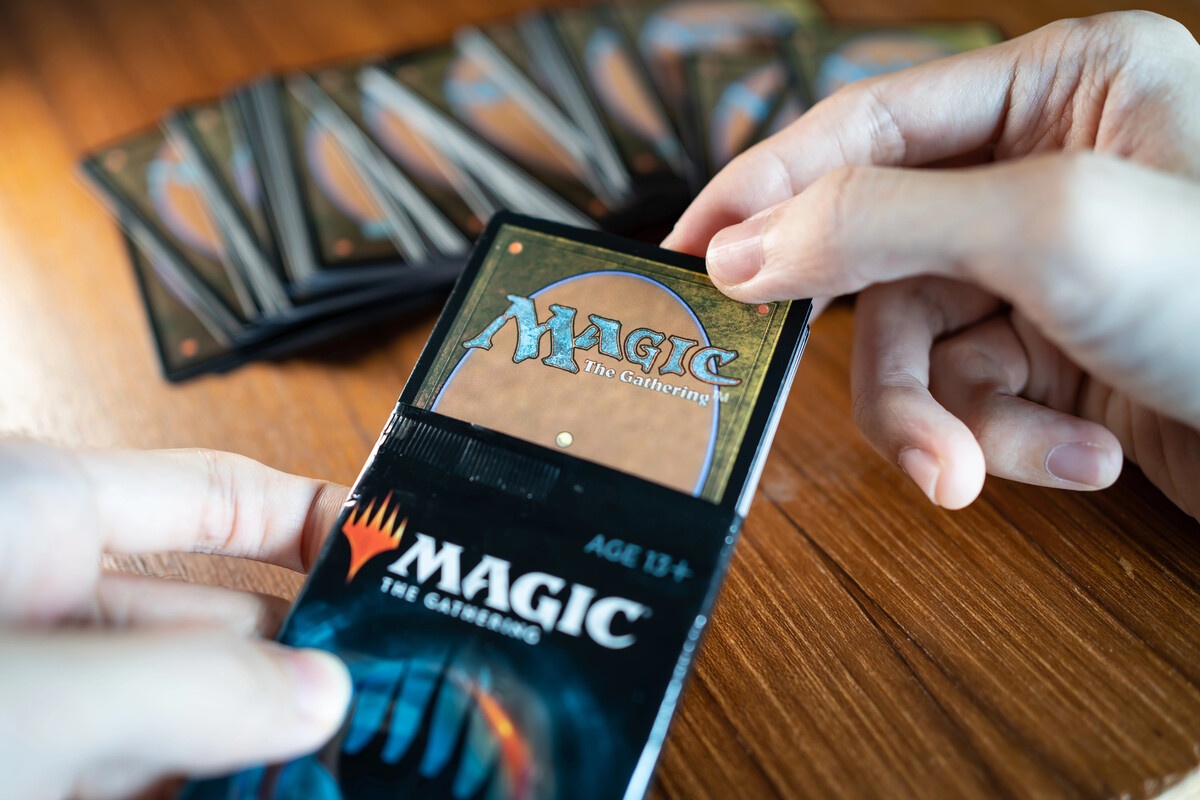
When you open a pack of cards, you're placing a bet. Money to purchase packs goes in, a randomized outcome comes out. Winners gain at the expense of losers on the resale market. Pull a $200 card from a $5 pack and someone else opened 39 packs and found nothing. The house set the odds. The house is the card company.
A lottery ticket gives you a random shot at a prize for a fixed price. A booster pack does the same thing. The useful cards you pull determine the value returned, but you had no control at the time of purchase. The mechanics mimic every other game of chance.
Variable ratio reinforcement makes it worse. Dopamine fires hardest before the reward lands, not after, which is a core reason why trading cards are so addictive. The moment before you see the cards within is the peak, the same peak casino designers engineer into slot machines. Random rewards, rare cards, sometimes, unpredictably, produce stronger behavioural lock-in than guaranteed ones. Your brain doesn't distinguish between a slot lever and tearing a sealed pack open. The gambling-like mechanics are identical.
Survey data and academic research back this up. Buying packs produces the same pre-purchase anticipation patterns associated with gambling. The behaviour wasn't accidental. It was designed.
Purchase booster packs, loot boxes, same transaction
Two countries tried to do something about this. Both acted in April 2018. The outcomes were very different.
Belgium's Gaming Commission ruled that paid loot boxes in video games constituted gambling under existing Belgian law. The reasoning was straightforward: players spend real money on randomized items with variable real-world value. That meets the legal definition. The ruling stuck. EA initially refused to comply with FIFA's loot box model and the Brussels prosecutor's office opened a criminal investigation. EA eventually caved and removed FIFA Points from the Belgian market in January 2019. Blizzard publicly stated they "did not share the same opinion" but complied anyway, removing paid loot boxes from Overwatch, Heroes of the Storm, and Hearthstone in Belgium. Other publishers followed. Belgium drew a line and held it.
The Netherlands tried the same thing at the same time. The Dutch Gaming Authority ruled that loot boxes with tradeable items violated gambling law and fined EA. But EA fought it in court. In March 2022, the Dutch Council of State overturned the fine, ruling that FIFA Ultimate Team packs, when considered as part of the broader game of skill, did not constitute standalone gambling. The ruling was narrow and specific to FIFA, not a blanket statement that all loot boxes are legal. But the effect was clear: the Netherlands backed down where Belgium did not.
Loot boxes in video games and buying booster packs are the same transaction. Real money in, randomized product out, variable value. Cosmetic loot boxes with no resale value sit in a grey area. TCG booster packs from sets with active secondary markets don't. Rare cards have documented resale value. The exchange of money or valuable goods for an outcome whose outcome is unknown is gambling.
Mobile games run the same mechanic. Gacha systems, spend currency, pull random characters, directly mimic the booster pack model. Japan, China, and Belgium regulate them. Most other countries don't.
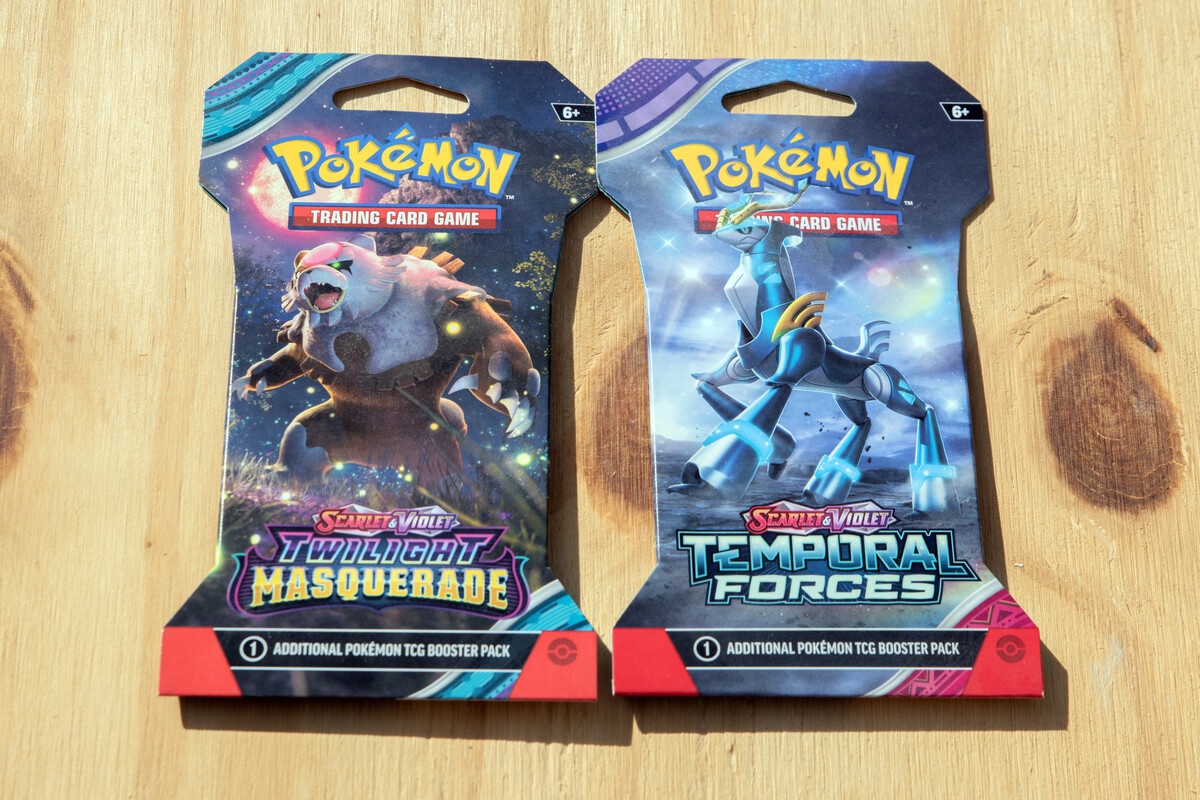
A pack of pokemon cards. A Pokémon card that's statistically rare. The hit from pulling that Pokémon card. None of that is different from hitting a bonus round on a slot machine. The ability to buy sealed packs and find something valuable is a game of chance, akin to gambling with a hobby label on top. Booster packs gain an in-game value that makes the transaction feel justified, but the deck is always stacked. Like loot boxes, the odds were set before you touched the pack.
Gambling problem: who actually gets hurt
Most people who buy card packs are fine. TCG is entertainment. Players collect for gameplay, community, art. Most people who buy a lottery ticket don't develop a problem.
The issue is people with gambling problems, and the statistically higher likelihood that they also spend money on loot boxes than their peers. Survey after survey shows the same overlap. Problem gambling and compulsive pack buying go together more than the industry acknowledges.
Children are the specific risk. Trading card games are marketed towards children as toys. When children learn the pack-opening loop early, pay, randomize, reveal, chase, they build reward pathways associated with gambling young. The same argument that got loot boxes regulated in Belgium applies here. Products with gambling-like mechanics marketed to children deserve scrutiny. The gaming industry learned this the hard way. TCG hasn't.
Card game players who can't stop buying packs describe the same cycle as people with gambling problems: bet, anticipate, loss of money, bet again. Hiding what you spend on trade cards, chasing a pull to recover losses, those aren't quirks.
Behaviour and the pack-opening loop
What Pavlov found about conditioned behaviour maps directly onto TCG collecting. His dogs salivated at a metronome because the sound predicted food. The anticipation became the response. Card game players who've opened hundreds of packs don't get excited because they rationally expect a chase pull. Their brain learned the ritual predicts reward.
The behaviour is the product. The cards are secondary. That's why the TCG market can grow during periods when the secondary market crashes. Players don't stop buying packs because the cards lose value. They stop when the behaviour loop breaks down. That's not how you interact with a toy.
TCG gameplay is a legitimate game of skill. Packs may contain gambling mechanics. Both are true at once.
The pinball case is worth revisiting. Roger Sharpe proved skill existed in pinball, but nobody argued the machine wasn't random. It was always random. He proved the person at the machine could exert real influence. A TCG player at a tournament can too. A collector who buys sealed product at a store cannot. Those are two different activities sharing the same cardboard. And one of them is gambling.
Are trading cards gambling: the verdict
Yes. Buying booster packs is a game of chance for money with variable returns. It meets the definition of gambling the same way a lottery ticket does.
Playing TCGs competitively is a game of skill. Two separate activities, same cards. The legal grey zone exists because regulators haven't separated them. The "hobby" and "children's game" framing kept trading card packs out of the scrutiny that got loot boxes regulated in Belgium and scrutinized in parts of Europe.
Set a budget before you open a pack. Know what the rush is. The system was built to keep you coming back, and it's very good at its job.
Every collector who opens a pack is sitting at a table. The house set the odds before you walked in. The cards within are already decided. You just haven't looked yet.