A booster box costs $160. Most cards inside are worth pennies. One card might be worth more than the box. The reason is not what you'd guess.
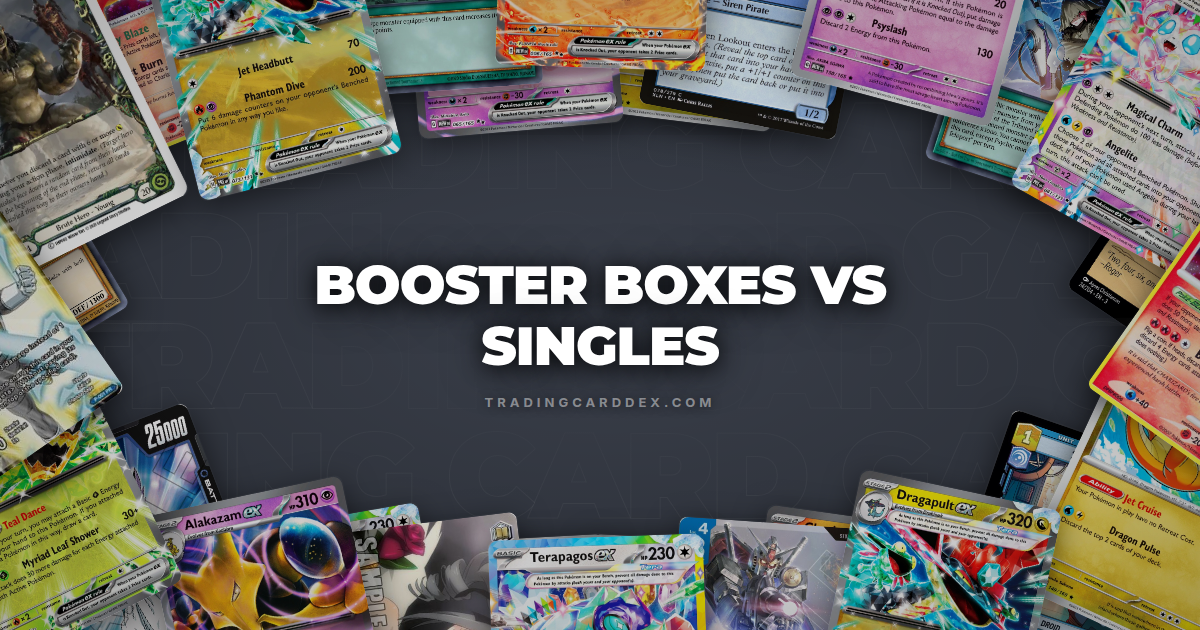
Every booster box carries a hidden number that most buyers never calculate before ripping the shrink wrap. That number is the gap between what the box costs and what the cards inside are actually worth on the secondary market. Understanding where that gap grows and where it shrinks is what separates smart spending from expensive guesswork in the booster boxes vs singles debate.
The Expected Value Problem with Booster Boxes
The fundamental tension between booster boxes and singles comes down to one concept: expected value. Every sealed booster box contains a fixed number of booster packs, each with a randomized assortment of commons and uncommons, rares, and the occasional chase card. The manufacturer sets the pull rates, and those pull rates determine the statistical average of what a box will return in card value. The trouble is that this expected value almost always falls below the retail price of the box itself.
To put this in concrete terms, consider a standard Pokemon TCG booster box, which contains 36 booster packs. Each pack guarantees at least one rare or higher rarity card, but the chance of pulling a full art, a Special Illustration Rare, or any of the truly valuable cards in a given set remains slim. Data aggregated from hundreds of box openings consistently shows that the average Pokemon booster box returns somewhere between 70 and 90 percent of its retail cost in single card market value. A box purchased for $140 might yield $98 to $126 in singles on a typical opening. That gap between purchase price and expected return is not a fluke or bad luck. It is the margin that funds the entire supply chain from printer to distributor to retailer.
Unsurprisingly, the math looks similar across other major card games. An MTG Play Booster box at $115 to $150 tends to return $70 to $110 in singles depending on the set. Yu-Gi-Oh booster boxes fluctuate more wildly because of how Konami structures rarity and print run sizes, but the general pattern holds. You are paying a premium for the randomness, and that premium reliably eats into your returns, which is part of why trading cards are expensive in the first place. Understanding this dynamic is the starting point for any rational purchasing decision in the tcg space.
When Buying Singles Is the Clear Winner
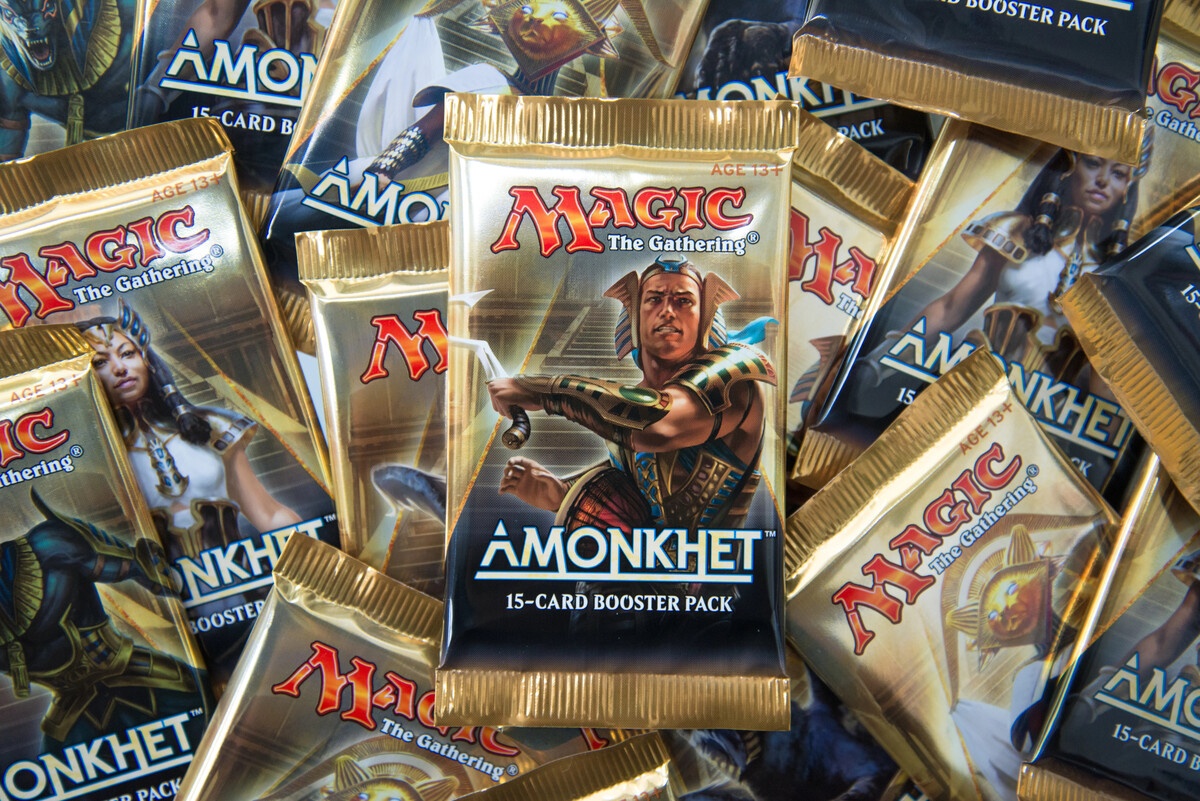
If the objective is to acquire specific cards, buying singles beats opening random packs in virtually every scenario. This is not a close call. The math is brutal and unambiguous.
For example, say you need a particular Pokemon card worth $15 on the secondary market. The chance of pulling that exact card from a single booster pack might sit around 1 in 200, depending on set size and rarity tier. At roughly $4.50 to $5 per pack, you would need to spend an expected $900 to $1,000 in packs to pull one copy statistically. Purchasing singles for $15 saves $785. Even in less extreme cases, where you need a handful of rares for a competitive deck, the economics of buying individual cards remain overwhelmingly favorable.
Naturally, this principle scales across every trading card game. Building a deck for tournament play in MTG might require a specific set of rares and mythics. Cracking booster boxes hoping to hit those exact cards is functionally equivalent to lighting money on fire. The secondary market exists precisely because it is more efficient. Sellers open the product, absorb the variance, and offer you the specific cards you want at prices that reflect actual supply and demand rather than randomized lottery odds. When the cards you want are known quantities with known prices, go for singles every time.
Beyond competitive play, the same logic applies to collectors targeting particular cards. If there is one expensive card from a set that you need for your binder, buying that single card directly is almost always better value than gambling on booster packs. The exception might be a card so scarce and so expensive that the secondary market premium approaches the cost of buying a case of boxes, but those situations are rare and usually involve older out-of-print products where sealed booster boxes carry their own collector premiums anyway.
When Booster Boxes Actually Make Sense
Still, despite the expected value deficit, there are legitimate reasons to buy a booster box, and dismissing them would be intellectually dishonest. The key is understanding that the value proposition of sealed product extends beyond raw card market value.
Draft night with friends is perhaps the strongest non-financial argument for buying a box. A single MTG Play Booster box supports a full eight-player draft, providing hours of gameplay, social interaction, and the unique strategic challenge of building a deck from a limited card pool. Try putting a dollar value on that experience and comparing it to the cost of movie tickets or a night out. Suddenly the gap between box price and expected card value looks less like a loss and more like an entertainment expense. Pokemon and Yu-Gi-Oh have their own sealed play formats, and a booster box is the natural unit for running those events at home.
On top of that, the opening experience itself carries genuine psychological value that should not be dismissed as irrational. The anticipation of cracking each booster pack, the dopamine hit of seeing holos and chase cards revealed one at a time, the shared excitement of opening packs with a group: these are real benefits that buying singles cannot replicate. Trading card games are, at their core, games. The experience of opening packs is part of the game design, and for many collectors, it is the most enjoyable part.
Meanwhile, there is also a collection-building efficiency argument for booster boxes in certain situations. For someone just getting into a game, a booster box serves as a far more comprehensive starter pack than any preconstructed product, exposing you to the full breadth of a set at once. Early in a new set's lifecycle, if you own very few cards from that set, buying a booster box efficiently fills out your collection of commons and uncommons while giving you a reasonable shot at several rares. The duplicate rate stays manageable on that first box. Buying singles for every common and uncommon in a new set would involve dozens of individual purchases, shipping costs, and transaction friction that a single box purchase eliminates. The inflection point typically comes after one or two boxes, when the duplicate rate climbs and targeted singles purchases become more efficient for filling remaining gaps.
The Pokemon Market: A Case Study in Booster Box Economics
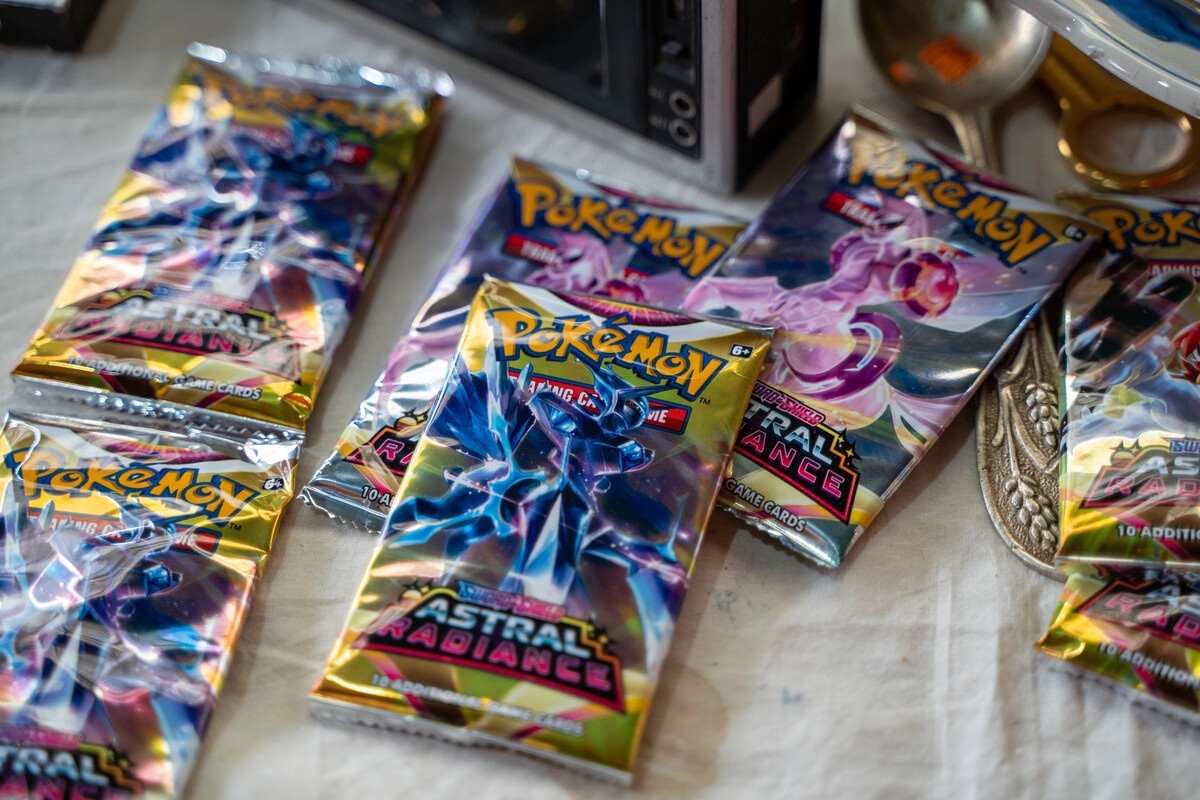
The Pokemon trading card game offers a particularly instructive lens for examining the booster boxes vs singles question because of how dramatically the market has shifted over the past several years. Pokemon TCG booster boxes have become collector items in their own right, with sealed product appreciation creating a secondary investment thesis that exists alongside the traditional singles market.
Modern Pokemon sets feature tiered rarity systems with Special Illustration Rares, illustration rares, and hyper rares sitting at the top. The chance of pulling any given chase card from a single booster pack is low enough that most box openings will miss the highest-value hits entirely. A Pokemon booster box might contain one or two cards worth more than $10, a handful in the $3 to $8 range, and stacks of bulk worth pennies per card. The variance is enormous. One box might yield a $60 Special Illustration Rare while the next yields nothing above $5.
As a result, this variance is precisely what makes the Pokemon singles market so active. Players and collectors who want a specific Pokemon card, say a particular full art Charizard or a coveted illustration rare, are far better served by purchasing singles than by gambling on booster packs. The Pokemon trading card game community has largely internalized this wisdom, and the secondary market for Pokemon trading cards is robust and liquid. Prices adjust quickly to reflect actual pull rates and demand, and tools like Trading Card Dex make it easy to browse what is available across sets before committing to a purchase.
However, where Pokemon differs from other card games is in the sealed product collector market. Certain sealed booster boxes, particularly those from limited print run sets or special releases, appreciate significantly over time. A sealed booster box from a popular set purchased at retail and held for several years can multiply in value, sometimes dramatically. This creates a genuine investment case for buying sealed product, though it requires patience, storage discipline, and the willingness to never open those packs. The moment you break the seal, you convert a collectible sealed product into a pile of random cards with an expected value below what you paid.
MTG and Yu-Gi-Oh: Different Games, Different Math
The booster boxes and singles calculus shifts depending on which trading card game you play, and MTG and Yu-Gi-Oh each present their own unique dynamics worth examining.
Magic: The Gathering has the most mature and well-analyzed secondary market in the tcg world. Decades of price data, sophisticated analytics tools, and a large competitive scene mean that MTG single card prices are relatively efficient. The expected value of an MTG booster box is well-documented for every set, often within days of release. What distinguishes MTG is the diversity of sealed products available. Play Boosters and Collector Boosters each carry different price points, different pull rate structures, and different expected values. Collector boosters, which guarantee multiple rares and premium treatments, compress the variance somewhat but come at a steep price premium. For competitive deck building, buying singles remains overwhelmingly better than boxes in MTG. The format is simply too card-specific, and the price differential between cracking packs and purchasing singles is too large to justify randomized purchasing for competitive purposes.
In contrast, Yu-Gi-Oh presents an interesting counterpoint because of how Konami handles rarity distribution and reprints. Yu-Gi-Oh booster boxes tend to have more predictable distributions for their highest rarity cards, and Konami's reprint policy means that expensive cards frequently get reprinted at lower rarity in subsequent sets, crashing their secondary market value. This reprint risk makes buying expensive Yu-Gi-Oh singles a riskier proposition than in Pokemon or MTG, where reprints are handled more conservatively. For Yu-Gi-Oh players, the calculation sometimes favors patience: wait for a reprint rather than buying a pricey single, and open current product for the enjoyment while the market sorts itself out. That said, for any specific card needed for a competitive Yu-Gi-Oh deck right now, purchasing singles remains the faster and cheaper path.
Sealed Product as Investment vs Singles for Play
The question of whether to buy booster boxes or singles also intersects with an entirely separate question: are you buying to play, to collect, or to invest? The answer changes the optimal strategy significantly.
For pure play purposes, buying singles is almost always the correct move. Competitive decks across Pokemon, MTG, and Yu-Gi-Oh require specific cards in specific quantities. No amount of booster box openings reliably produces a tournament-ready deck. The competitive player who buys booster boxes instead of singles is subsidizing the entertainment value of opening packs with money that could have gone directly toward winning games. Every dollar spent on random packs rather than targeted singles purchases is a dollar not optimizing for competitive performance.
For collectors, on the other hand, the answer depends on collection goals. Completionists focused on collecting the cards from an entire set will inevitably need both approaches. Booster boxes handle the bulk of commons and uncommons efficiently, while buying singles fills in the rare card gaps. Collectors focused on graded singles, PSA-certified cards, or specific high-value pieces should skip sealed product entirely and buy individual cards in the condition they want. The chance of getting a card in perfect centering and condition suitable for high-grade certification from a random booster pack adds yet another layer of improbability to an already unfavorable expected value equation.
Then there is the investment angle, which is where sealed booster boxes carve out their strongest independent case. Sealed product, by its nature, grows scarcer over time as boxes are opened and inventory depletes. A sealed booster box from a popular set becomes a finite collectible. Singles, by contrast, increase in supply as more boxes are opened, at least until a set goes out of print. This supply dynamic means sealed product and singles can actually move in opposite directions over time: sealed boxes appreciating while individual cards from the same set depreciate or stagnate. Serious collectors who treat sealed booster boxes as long-term holds have historically earned strong returns, particularly on Pokemon and MTG products, though the broader question of whether trading cards are a good investment deserves its own careful look. The risk, of course, is that not every set appreciates. Overprinted sets, unpopular releases, and market downturns can leave sealed product sitting flat or declining for years.
The Trade Fodder Argument and Social Value
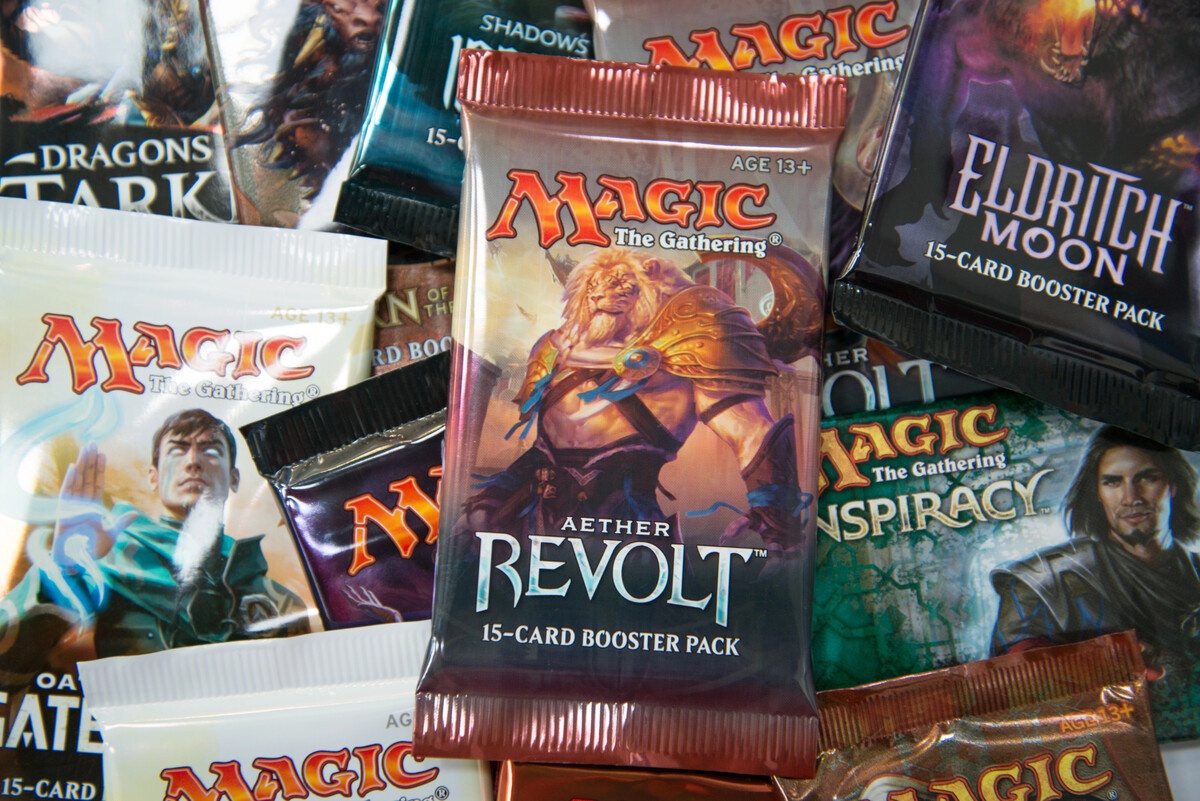
One frequently overlooked benefit of buying a booster box is the trade fodder it generates. Opening packs produces a wide spread of cards, many of which hold little individual value but collectively serve as trading currency within local communities. A stack of duplicate rares, promos, and holos from a box opening becomes social capital at card shops, school lunchrooms, and trading events. This value does not show up in expected value calculations, but it is real.
More importantly, the social dimension of trading card games depends heavily on having cards to trade, and booster boxes supply that inventory in a way that targeted singles purchases do not. Buying the exact four copies of one rare card for a deck leaves you with nothing to offer a trading partner. Cracking a box leaves you with dozens of cards that other collectors and players want, creating opportunities for trades that might net you cards you need without additional cash outlay. For younger players and casual collectors especially, the breadth of a booster box opening feeds the social ecosystem that makes trading cards engaging in the first place.
There is also the matter of discovery. Opening packs from a new set exposes you to cards you did not know existed, gameplay mechanics you had not considered, and artwork you would never have sought out as individual purchases. This serendipity has genuine value for players exploring a trading card game rather than executing a predetermined deck list. The booster pack is a curated sample of what a set offers, and sometimes stumbling onto an unexpected card is more satisfying than receiving exactly what you ordered.
A Practical Framework for Deciding
Rather than declaring a universal winner in the booster boxes vs singles debate, the more useful approach is matching your purchasing strategy to your actual goals.
Buy singles when you need specific cards for a deck, when you are targeting particular rare or valuable cards for a collection, when you want to minimize spending per card acquired, or when you are completing a set and only need a handful of remaining pieces. Purchasing singles is the rational default for anyone optimizing on cost efficiency. It eliminates variance, removes the gambling element, and lets you allocate your budget precisely toward the cards that matter most to you.
Buy a booster box when you want the opening experience, when you are hosting a draft with friends, when a new set just launched and you want broad exposure to its contents, when you are starting a collection from zero in a particular set, or when you are deliberately buying sealed product as a long-term collectible hold. In these scenarios, the expected value shortfall is not a hidden cost. It is the price of admission for a different kind of value that singles purchases cannot provide.
The worst approach is the unexamined middle ground: buying packs hoping to pull specific cards while telling yourself it is also fun. That framing lets you avoid confronting the math while spending more than either pure strategy would cost. If you want specific cards, buy singles. If you want the experience of opening packs, buy a booster box and enjoy it without pretending it is an efficient acquisition strategy. Clarity about your own motivations is the best tool for making smart purchasing decisions in any trading card game.
Is it better to buy singles or booster boxes? The honest answer is that it depends entirely on what you are buying for. Are booster boxes worth it? In pure expected value terms, almost never. In terms of total experience, community engagement, and sealed collecting, they absolutely can be. The key is knowing which question you are actually asking before you reach for your wallet.