What happens to a hobby built on cardboard when the digital version becomes faster, cheaper, and more accessible in every measurable way? Digital trading card games are pulling in hundreds of millions of downloads, publishers are pouring development budgets into apps instead of print runs, and the…
What happens to a hobby built on cardboard when the digital version becomes faster, cheaper, and more accessible in every measurable way? Digital trading card games are pulling in hundreds of millions of downloads, publishers are pouring development budgets into apps instead of print runs, and the player counts on platforms like Pokemon TCG Pocket and Marvel Snap dwarf most local tournament scenes. The momentum raises a question the entire TCG hobby has to reckon with: will digital overtake physical trading card games, or is there something about paper that screens simply cannot replace?
The Current Landscape of Digital Card Games
The digital card game space in 2026 looks nothing like it did a decade ago. Hearthstone proved a digital-only TCG could attract millions of players, and now every publisher wants the same thing. If you ask what the most played digital card game is right now, the answer changes depending on the week, because the competition has gotten that tight. Every major trading card game now has a digital counterpart, and several of the biggest names exist only on screens. The playerbase across these games is massive.
To understand how the space got here, consider the timeline. Hearthstone set the template in 2014 and still holds a large player count even as competition has piled on. Blizzard showed that a polished digital card game with tight game design could survive without any physical product behind it. The f2p model brought in players who would never have walked into a game store, and the seasonal ranked system kept them logging in. Most digital TCGs that followed copied the same monetisation structure: free entry, paid progression, and a steady drip of new cards designed to keep the spending cycle going. Games like Hearthstone proved this model works, and everyone else took notes. The result was a new category of collectible card games that existed entirely on screens, separate from the paper cards that built the hobby in the first place.
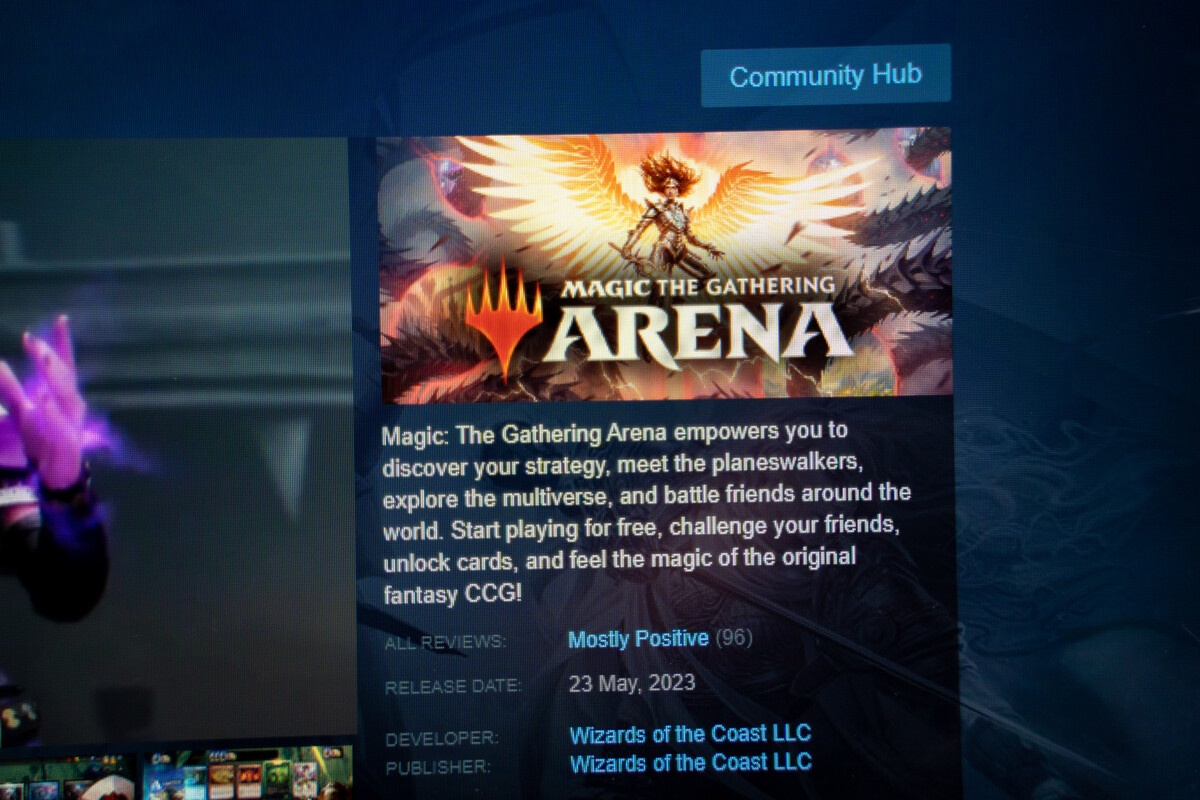
Meanwhile, MTG Arena brought Magic: The Gathering into the digital space in a way that Magic Online never managed. Wizards of the Coast built a client that actually felt modern, and it pulled an entire generation of players into the deepest TCG ever designed. Pokémon TCG Live replaced the older Pokemon Trading Card Game Online client, and then Pokémon TCG Pocket arrived as a mobile-first experience that stripped the game down to a quick, accessible format with its own take on booster packs and collecting. Yu-Gi-Oh Master Duel launched as a free to play client covering the full modern card pool, and it hit 10 million downloads in under three weeks. Marvel Snap went a different direction entirely, building a fast, original digital card game around the Marvel IP and proving you could still create something fresh in an oversaturated genre.
Taken together, these are not fringe products. Digital TCGs pull in hundreds of millions of dollars annually. Nobody is questioning whether they are popular, and for anyone still wondering whether trading card games are worth it, the sheer scale of these platforms makes the case on its own. The real question is what you actually get for that money and that time, and whether the advantages and disadvantages of each format really stack up the way people assume.
The Accessibility Argument for Digital TCGs
The strongest case for digital cards is friction, or rather the total absence of it. Download an app, create an account, and you are playing within minutes. You skip the drive to a local game store, skip finding an opponent, skip shuffling and sleeving and sorting through binders to trade cards or hunt down the one card that completes a deck. Digital platforms handle matchmaking, rule enforcement, and collection tracking without any effort on your end.
Beyond convenience, for someone who lives in a rural area with no local game store, or someone whose schedule makes weekly tournament nights impossible, digital TCGs solve a real problem. Being able to queue into a ranked match at 11 PM on a Tuesday, finish a game in ten minutes, and close the app is worth a lot. Pokémon TCG Pocket takes this even further by condensing matches into bite-sized sessions that fit into a lunch break.
On top of that, cost at entry is another major advantage. Most digital card games are free to play, and the initial experience is generous enough to keep new players engaged without spending anything. Marvel Snap hands out cards for free at a steady pace through its progression system. Master Duel gives enough gems at the start to build a competitive deck without touching a credit card. MTG Arena's free Jump In! tokens and starter decks provide a real taste of Magic without any financial commitment. Compare that to walking into a game store and spending fifteen to thirty dollars just to get a physical starter deck, and the accessibility gap is obvious.
Matchmaking in digital platforms is another quiet advantage. Finding an opponent at your skill level in paper TCGs requires either a healthy local scene or a tournament structure. Digital games handle it automatically. A new player in Master Duel is not going to get matched against someone in the top ranks during their first session. That smooths out the learning curve in a way that paper play just cannot.
Where Digital Platforms Fall Apart on Ownership
With all of that said, this is where the whole comparison flips. Every digital card in every digital collection on every platform exists at the pleasure of the company that runs it. That is not a philosophical point. It is a legal and practical reality that has already played out multiple times.
When a digital card game shuts down, everything in it disappears. The cards, the decks, the collection built over months or years of play and spending. Gone. This is not hypothetical. It has happened, and it will happen again. Games have shut down servers and left players with nothing for their time and money. The precedent extends well beyond gaming, too. Amazon has revoked access to digital books that customers paid for. Sony announced plans to remove purchased Discovery content from PlayStation libraries, and although the decision was reversed after public backlash, the fact that it was even possible proved the point. The pattern is always the same: when you buy something digital, you are not buying a product. You are buying a license to access that product for as long as the company feels like offering it.
Unfortunately, the same principle applies to every gacha-style game and every digital TCG on the market. Servers cost money. Development teams cost money. The moment the revenue no longer justifies those costs, the company pulls the plug. It does not matter how much real money a player has spent. It does not matter how rare the cards in digital collections are. Once the lights go off, the entire thing is gone.
Even transitions between platforms expose the fragility. Pokémon TCG Live replaced Pokemon Trading Card Game Online, and while the transition allowed some card migration, it also showed how fragile digital collections are. Players who had spent years building collections on the old client had to navigate a conversion process that didn't carry everything over cleanly. MTG Arena exists in a separate ecosystem from paper Magic, meaning cards acquired digitally have zero transferability to the physical version of the game. The digital versions of these games are walled gardens where nothing you accumulate has existence outside the garden walls.
Marvel Snap players, Hearthstone players, Master Duel players: none of them own a single card. The collection screen shows cards, but those cards are rows in a database controlled by someone else. When the cost of maintaining that database exceeds the revenue it generates, the database gets deleted. That is how every digital TCG ends, eventually.
Physical Cards as Actual Property
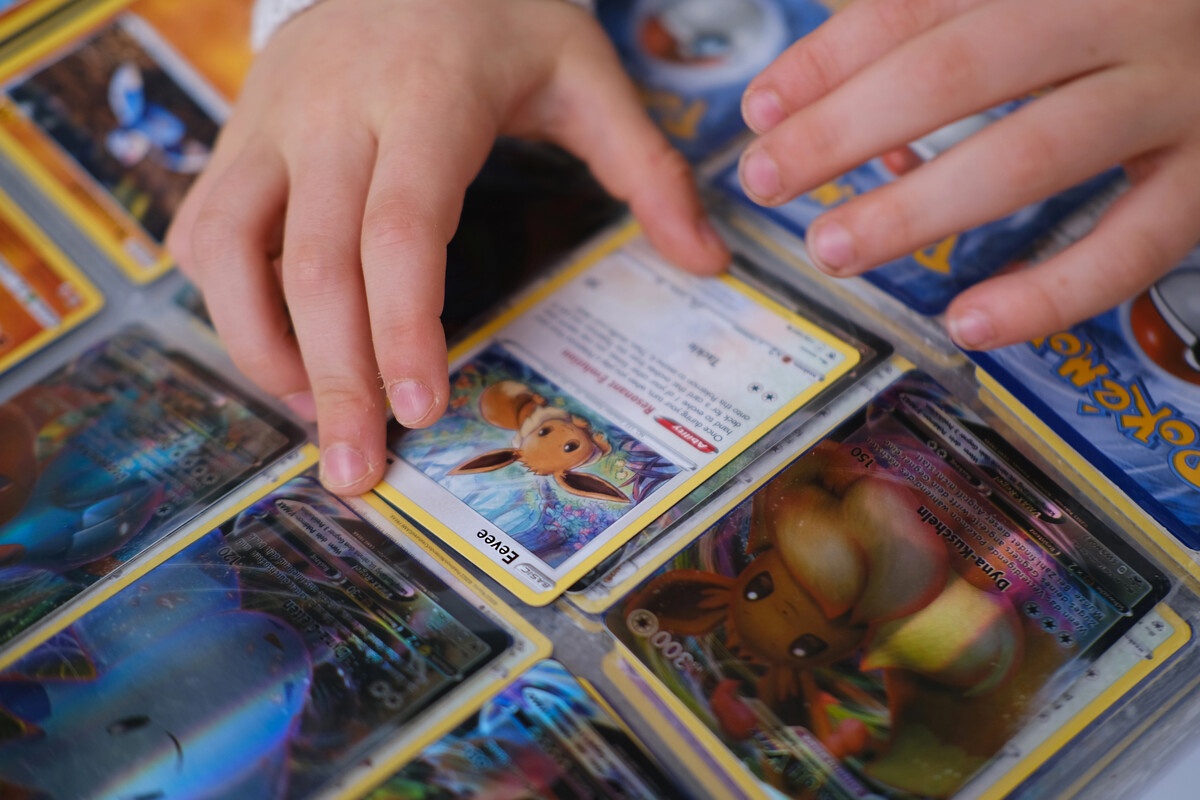
A physical card is a physical object. That sounds painfully obvious until you hold it up against everything described above. A Pokémon card sitting in a binder on a shelf belongs to the person who bought it. No company can patch it, no server shutdown erases it, and no terms of service update revokes access to it. It is property, with all the legal protections that word carries.
More importantly, the physical card market has survived recessions, industry crashes, format rotations, and decades of changing tastes. Sports cards and TCG cards alike have proven this. Paper cards printed in the 1990s still exist. They still trade hands. They still hold value and in many cases have appreciated enormously. A first edition holographic Charizard from 1999 is worth more today than it has ever been. That is a 27-year track record of ownership that no digital platform can come close to matching.
As a result, physical cards can be traded, sold, gifted, or passed down to the next generation. A trade binder full of rare cards has weight, both literally and financially. The secondary market for physical TCG cards is large, liquid, and operates independently of any single company's decisions, which is one reason tools like Trading Card Dex exist to help players track and browse what is out there. If the Pokemon Company stopped making new cards tomorrow, every existing Pokemon card would still belong to the people who own them. The cards would still be playable, tradable, and collectible. Nothing changes except the flow of new product.
This permanence is the single biggest advantage physical card games hold over digital. The difference between physical and digital comes down to whether the thing you paid for can be taken away. When someone spends money on booster packs at a card shop, they walk away with objects they can hold in their hands. When someone spends the same money on digital booster packs, they walk away with data on a server they do not control. One of those is owning. The other is renting.
The Cost Comparison Is More Nuanced Than It Seems
One of the most common arguments in favor of digital TCGs is that they are cheaper. On the surface, this is true. Free to play models let players engage without spending a dollar, and building a competitive deck in a digital game usually costs less than its paper equivalent. A meta deck in Master Duel might require a few thousand in-game gems, which can be earned through play. The same deck in physical Yu-Gi-Oh could run well over a hundred dollars in singles. MTG Arena lets players draft for free periodically, while a paper draft night costs fifteen to twenty dollars every time.
However, this comparison misses something critical. Money spent on physical cards retains value. Money spent on digital cards does not. That competitive deck built in MTG Arena for forty dollars worth of gems is worth exactly zero dollars the moment it is built. It cannot be sold. It cannot be traded. If the meta shifts and the deck becomes irrelevant, those digital cards just sit in a collection with no exit strategy. The same forty dollars spent on paper Magic singles can be sold back to a store, traded to another player, or listed online. The cards hold some percentage of their value and in some cases increase in value over time.
When the true cost of a TCG is measured not as money spent but as money retained, physical cards win convincingly. A player who spends five hundred dollars on paper Magic over a year might have three hundred dollars worth of cards sitting in their collection at the end of that year. A player who spends five hundred dollars on MTG Arena over a year has a digital collection worth nothing on the open market. Over five years, ten years, or longer, that gap becomes enormous.
On top of all that, the free to play model is also less generous than it appears. Digital TCGs are designed around monetisation psychology. Drop rates for rare cards are carefully tuned, and rarity tiers in digital packs often feel designed to frustrate rather than reward. Progression systems slow down at predictable intervals to encourage spending. Battle passes, seasonal content, and limited-time offers create urgency. Players pay in time when they do not pay in money, and the grind required to stay competitive as a free player is substantial. The game is technically free, but the true cost is measured in hours spent doing daily quests and climbing reward tracks instead of simply buying the cards needed and playing the game.
Community and Tournament Play: A Split Decision
The community experience in digital and physical TCGs could not be more different. Digital platforms connect players across the globe instantly. A player in Brazil can match against a player in Japan without either of them leaving their couch. Online tournaments run smoothly with automated brackets and no logistical overhead. Streaming and content creation around digital TCGs has built huge communities on Twitch and YouTube, and the spectator experience for digital games is better by default because the game state is always visible on screen.
In contrast, physical TCG communities run on a completely different frequency. Local game stores are gathering points where players meet face to face, build actual relationships, and form the kind of bonds that online interactions rarely produce. Tournament day at a card shop has an energy that no digital ladder can touch. Sitting across from an opponent, reading their body language, placing cards on a table, shaking hands after the match. That is a social experience a screen cannot deliver. The trade binder culture at physical events, where players flip through each other's collections looking for cards they need, is a ritual with no digital equivalent.
At the highest competitive levels, physical card games still own the stage. Pokemon TCG World Championships, the Yu-Gi-Oh World Championship, and Magic Pro Tour events are major productions with real prize pools and real prestige. Digital tournaments exist and some carry prize money, but the physical tournament circuit is still where competitive legitimacy lives for every major TCG.
The split here is real, and anyone trying to trade cards or build connections through the hobby will feel it immediately. Digital wins on convenience and global reach. Physical wins on depth of connection. If the goal is competitive grinding and fast games, digital platforms deliver. If the social side of TCGs matters more, nothing replaces the card shop, the convention floor, or the kitchen table.
What Happens When Digital Games Get Nerfed, Rotated, or Shut Down
Beyond shutdowns, there is a risk with digital card games that has no equivalent in paper: the cards themselves can change after you get them. Physical cards are locked in once printed. The text on the card is the text on the card, period. In digital TCGs, cards get nerfed routinely. A card that was strong enough to justify spending resources on can be weakened in a patch, and suddenly the deck built around it stops working. Marvel Snap balances cards regularly. Hearthstone has nerfed and buffed cards throughout its entire lifespan. The card you got is not necessarily the card you keep.
That creates a very different relationship with the collection. In paper TCGs, a card that gets banned or rotated out of a format still exists as a physical object with collector value and potential use in other formats. A banned card in physical Magic might drop in competitive value but remains playable in casual formats like Commander. In digital TCGs, a nerfed card is just worse, and there is no casual format where that matters because the nerf applies everywhere.
Format rotation in digital games also hits differently. When a set rotates out of Standard in MTG Arena, those cards become usable only in Historic or other secondary formats with smaller playerbases. The physical version of those same cards can be played in Modern, Legacy, Commander, or at a kitchen table with friends who do not care about format legality. The physical card has more lives. The digital card has fewer exits.
And then there is shutdown. Every digital TCG will eventually shut down. The timeline varies. Could be five years, could be fifteen. But server infrastructure costs money, and no company will keep the lights on once revenue drops below that line. Every hour played and every dollar spent on a digital TCG carries the quiet understanding that it will all disappear someday. Physical cards have no expiration date.
Will Digital Overtake Physical Trading Card Games?
With all of these factors laid out, the question comes down to trajectory. Digital TCGs are growing fast. Player counts are climbing, revenue is up, and the apps keep getting better. On paper, that looks like a format that is about to overtake its physical counterpart. But growth in player count is not the same as replacing an entire format, and the history of digital media suggests that the overtaking people expect rarely plays out the way they assume.
The core problem is that digital TCGs have a built-in expiration date. Every digital card game that exists right now will eventually shut down. Servers get expensive, player counts decline, and companies move on. This is not speculation. It has already happened to dozens of online games, and the TCG space is not immune. When a digital game dies, the entire ecosystem around it vanishes: the cards, the ranked ladders, the collections, the money spent. Physical cards do not have this failure mode. A card printed in 1999 still exists in 2026, still holds value, and still gets played at kitchen tables.
The precedent from other digital media makes the pattern even clearer. Amazon has remotely deleted ebooks from customer devices. Sony announced plans to remove purchased Discovery content from PlayStation libraries before reversing course under backlash. Google shut down Stadia and wiped game libraries, and while all game and hardware purchases were refunded, the access itself was still gone. In every case, customers who thought they owned something discovered they were renting it. Digital TCGs operate on the same model. The cards in a player's collection are entries in a database, and the company holding that database can alter or erase them at any time. For digital to truly overtake physical, it would need to solve the ownership problem, and no platform has come close to doing that.
There is also the question of what "overtake" actually means. If the measure is total player count, digital might already be ahead. But if the measure is lasting cultural impact, long-term value retention, or the ability to hand a collection to someone twenty years from now, physical cards are not just winning. They are playing a different game entirely, one that digital has no mechanism to compete in. The gacha games and free-to-play clients will continue to pull in enormous audiences, but pulling in an audience and building something permanent are two very different things.
The Verdict: Physical Cards Win on What Actually Matters
Digital trading card games are good at what they do. The accessibility is hard to beat. The game design in titles like Marvel Snap is clever and original. Playing a quick match anywhere, anytime, against a global playerbase solves real problems that physical TCGs have always had. For casual play, for learning a game, for staying connected to the TCG hobby when life keeps you away from a card shop, digital platforms have real value.
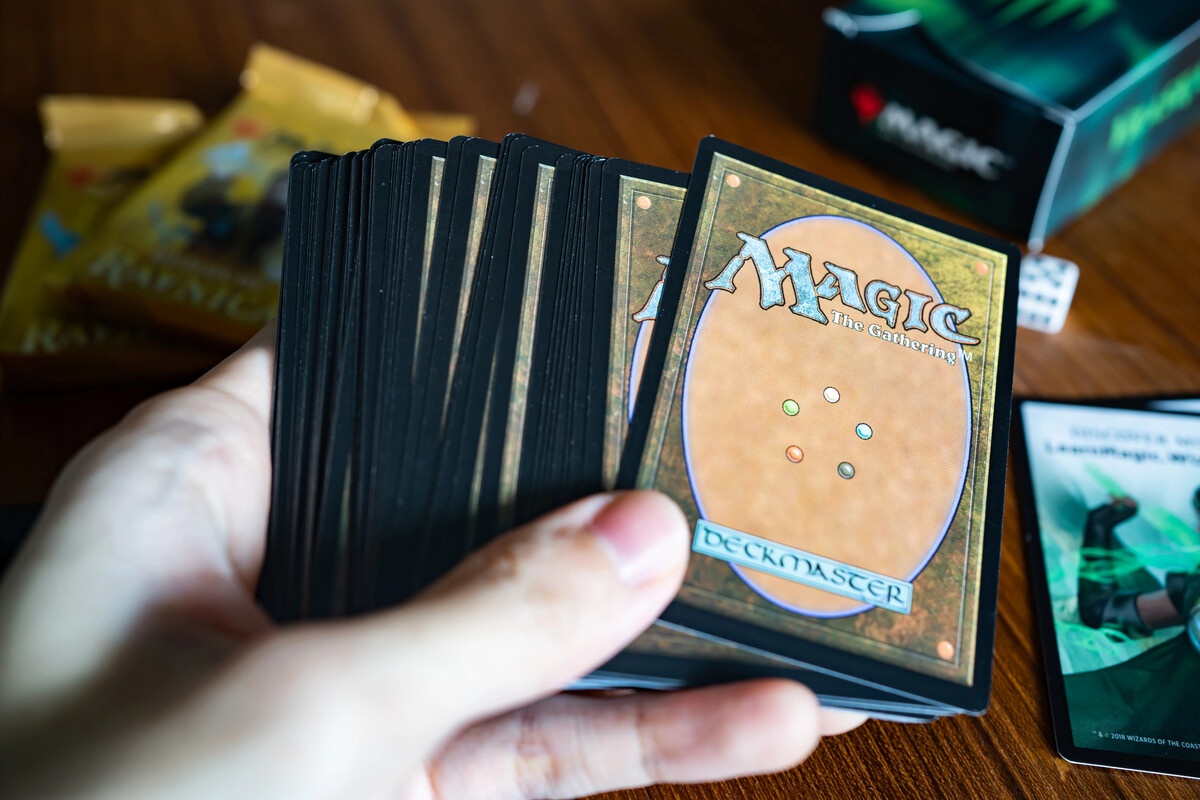
Yet when the full picture comes together, physical card games win on the things that actually matter. You own what you buy. A server shutdown cannot take it from you, a patch cannot change the cards you collected, and no corporate decision about profitability erases your collection overnight. The money spent retains value. The cards can be traded, sold, or passed down to someone who will appreciate them decades from now. And the community built around physical play creates human connection that outlasts any single game.
The thesis is straightforward, and every precedent in digital media backs it up: when you buy digital, you are renting. When you buy physical, you are owning. Both paper and digital have their place, but only one leaves you with something real when the dust settles. The TCG hobby has survived for over thirty years, a history of trading card games built on physical objects that outlast every platform, because the cards are real. They sit in binders and boxes and display cases. They get pulled out at kitchen tables and card shops and tournaments. They carry memories attached to physical objects that no app can replicate and no company can revoke.
Build the deck you want to play. Crack the booster packs that excite you. Fill the trade binder with cards that mean something, and trade cards with the people who share the hobby. Do it in paper, and it stays yours forever. That is a guarantee that no digital card game has ever made, and no digital card game ever will. The screens are fun, but the cards are forever.