The trading card market just crossed $15 billion. Dozens of new games launch every year hoping to claim a piece of it. Yet somehow, the same three titles that dominated a decade ago still control the overwhelming majority of that money. So what exactly happens to every other game on the shelf, and…
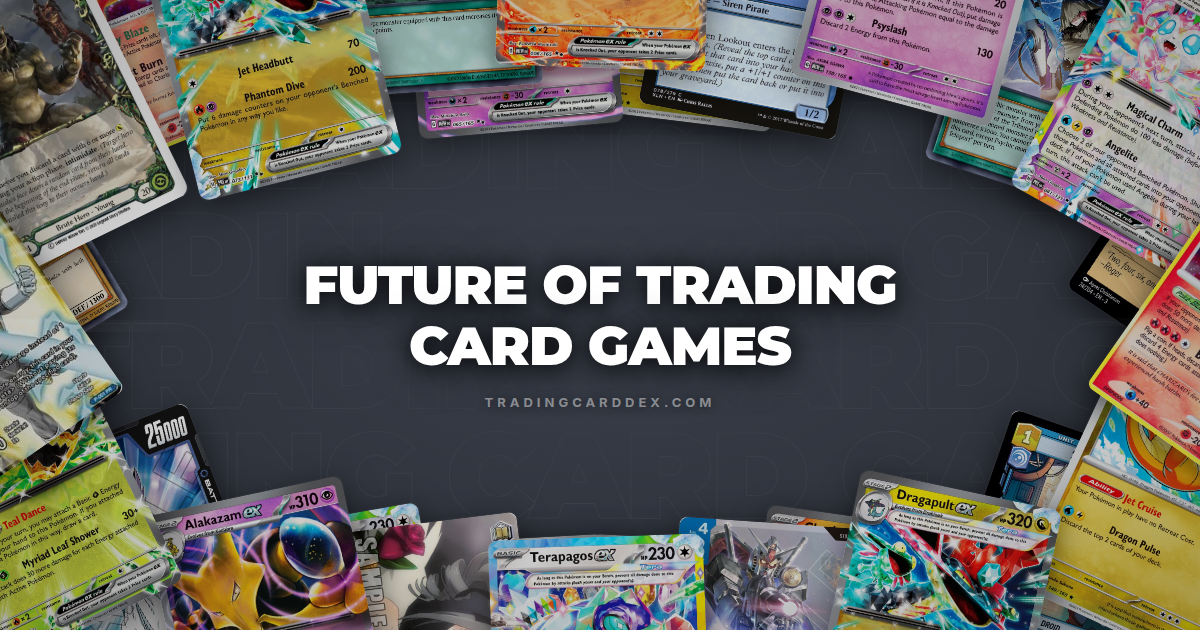
The trading card market just crossed $15 billion. Dozens of new games launch every year hoping to claim a piece of it. Yet somehow, the same three titles that dominated a decade ago still control the overwhelming majority of that money. So what exactly happens to every other game on the shelf, and what does the future of trading card games actually look like when the deck is stacked this heavily from the start?
The trading card market this year: bigger than ever
The global trading card market is enormous and still growing. Market data from multiple research firms puts the current market size well above $15 billion, with projections showing continued expansion at a compound annual growth rate (CAGR) of roughly 5 to 9 percent through 2030 and beyond. That range depends on which report you read and how broadly the analysts define the trading card market, but the direction is consistent across every credible market forecast. The trading card industry is not shrinking. It is expanding, and the pace of that expansion has surprised even optimistic analysts.
More importantly, where it comes from is the interesting part. The pandemic-era boom pulled millions of new players and collectors into the hobby between 2020 and 2022. The speculative frenzy cooled, but a real percentage of those people stayed. They discovered something enjoyable about card collecting, deck building, and the community that surrounds trading card games, and they stuck around after the hype died down. That retention transformed what could have been a temporary spike into a permanent expansion of the customer base. The trading card market in 2026 has more active participants than it did in 2019, and the infrastructure supporting them, from local game stores to online marketplaces to grading services, has scaled to match.
On top of that, the growth is also global in a way it wasn't before, and it spans categories. The sports card market and the TCG market used to operate as fairly separate worlds, but the collector and investor crossover between them has blurred those lines. Global trading card sales were dominated by North America and Japan for a long time, but markets across Europe, Southeast Asia, and Latin America have expanded since. Pokémon TCG products have historically launched in Japan first, though the first simultaneous global release is scheduled for October 2026. Yu-Gi-Oh has always had a strong international presence, and MTG has pushed hard into new regions through organized play and digital platforms. The trading card games market is no longer a niche Western hobby with a Japanese counterpart. It is a worldwide industry, and databases like Trading Card Dex reflect that global reach, and that geographic diversification makes the overall market more resilient to regional economic downturns.
Winner takes all: why a few TCGs dominate everything
Most casual observers of the trading card industry miss this. The market is growing, but that growth is not distributed evenly. A small number of dominant games capture the majority of revenue, attention, and new players, while everything else fights over scraps. This is the winner-takes-all phenomenon, and it defines the future of TCGs more than any other single factor.
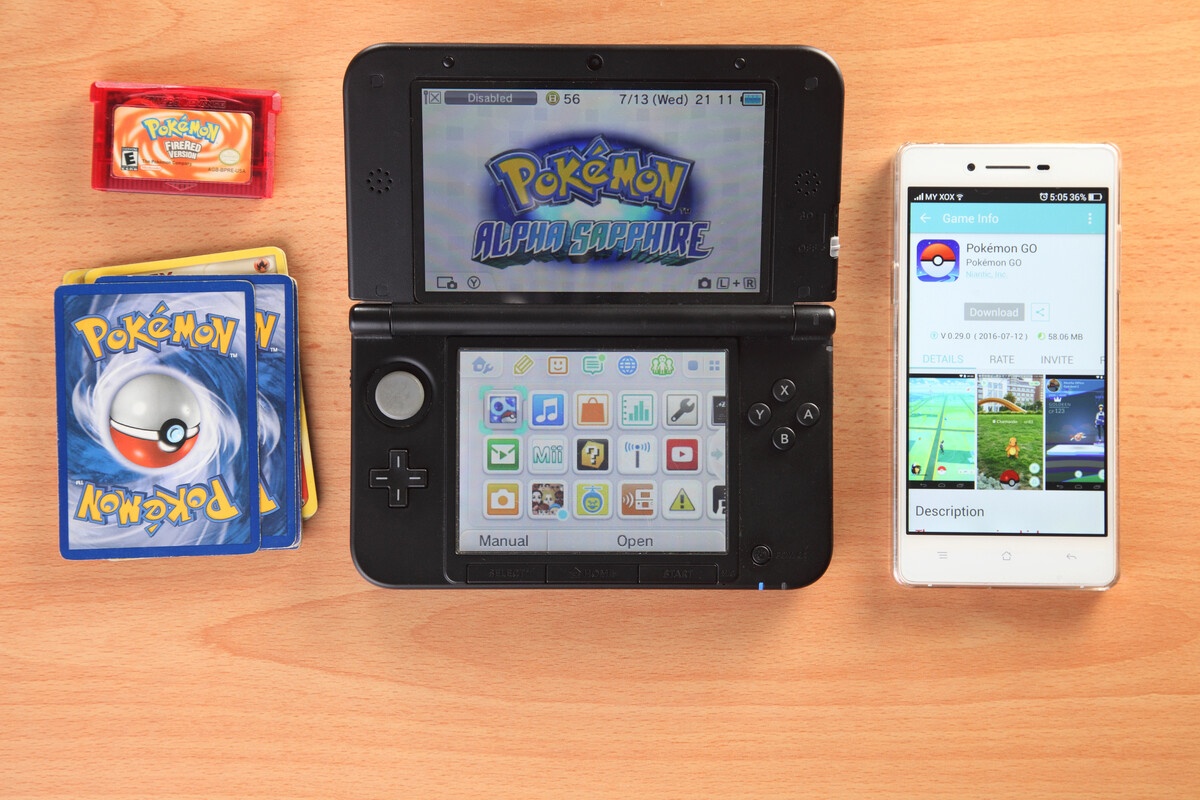
Pokémon, Magic: The Gathering, and Yu-Gi-Oh are the three pillars. Between them, they account for a staggering share of the total trading card market. Pokémon alone generates billions in annual TCG revenue and has a cultural footprint that extends far beyond the card game itself. MTG, despite being over thirty years old, continues to post record revenue years and has a player base that runs from competitive grinders to casual kitchen-table groups to high-end collectors. Yu-Gi-Oh maintains enormous popularity in Asia and a dedicated global competitive scene. These three games are not just successful. They are structurally entrenched in ways that make them almost impossible to displace.
One Piece is quickly getting steam and Gundam is launching on strong foundations, also Riftbound. But besides One Piece, their staying power remains to be seen.
So why does winner-takes-all exist in trading cards? It comes down to network effects. A trading card game is only as valuable as the number of people who play it, collect it, and sustain its secondary market. When a game reaches critical mass, every new player makes the game more attractive to the next potential player. More opponents to play against. More cards being bought and sold on the secondary market. More content creators making videos about it, more organized play events to attend, more local game store shelf space dedicated to it. That flywheel is powerful, and once it gets spinning fast enough, competing against it becomes nearly impossible.
Naturally, this dynamic shows up in market share data for card collecting, too. Pokémon TCG products take up the most retail shelf space. They get the most prominent displays at Target and Walmart. They receive the most YouTube and TikTok coverage. When a pop culture moment happens, like a celebrity opening vintage Pokemon packs on a livestream, it pulls attention toward Pokémon specifically, not toward trading cards in general. The rising tide does not lift all boats equally. It lifts the boats that already have the most passengers.
The role of franchise strength and pop culture moments
One of the clearest predictors of a trading card game's long-term viability is the strength of the franchise behind it. Pokémon is a multimedia empire. Video games, an animated series, movies, merchandise, a mobile app ecosystem. The brand stays in front of younger audiences constantly whether anyone is trying to sell them cards or not. That franchise depth means there is always a pipeline of new fans discovering Pokémon for the first time and eventually finding their way to the Pokémon card aisle. No marketing budget for a standalone TCG can replicate that kind of organic brand awareness.
Meanwhile, Magic: The Gathering took a different path but arrived at a similar place. MTG built its franchise strength through decades of consistent releases, a deep lore universe, and a competitive scene that doubles as entertainment in its own right. The expansion into Universes Beyond, where Magic cards feature characters and settings from franchises like Lord of the Rings and Marvel, was a deliberate move to borrow franchise strength from other IPs. It worked. The Lord of the Rings set became the best-selling Magic set of all time, a record that held until the Final Fantasy set surpassed it in 2025. MTG proved that even a game without a traditional media franchise behind it can tap into franchise power through licensing deals.
Yu-Gi-Oh benefits from its anime and manga roots, which continue to introduce the game to younger audiences across Asia and globally. The connection between the show and the card game creates an emotional hook that gameplay alone cannot achieve. When someone watches a character summon a monster in the anime and then holds that same card in their hands, the experience goes beyond game mechanics. That emotional layer is what franchise strength provides, and games without a strong IP simply cannot manufacture it.
And this is where smaller TCGs hit a wall. A game like Flesh and Blood can have excellent gameplay, beautiful card art, and a passionate community, but without a franchise ecosystem feeding it new players organically, every single customer has to be acquired the hard way. That acquisition cost is brutal in a market where Pokémon and Magic are essentially getting new players for free through their broader brand presence. Pop culture moments overwhelmingly benefit the established games, and the gap between the haves and have-nots widens with each viral unboxing video and each mainstream media mention.
Digital platforms and the physical-digital split
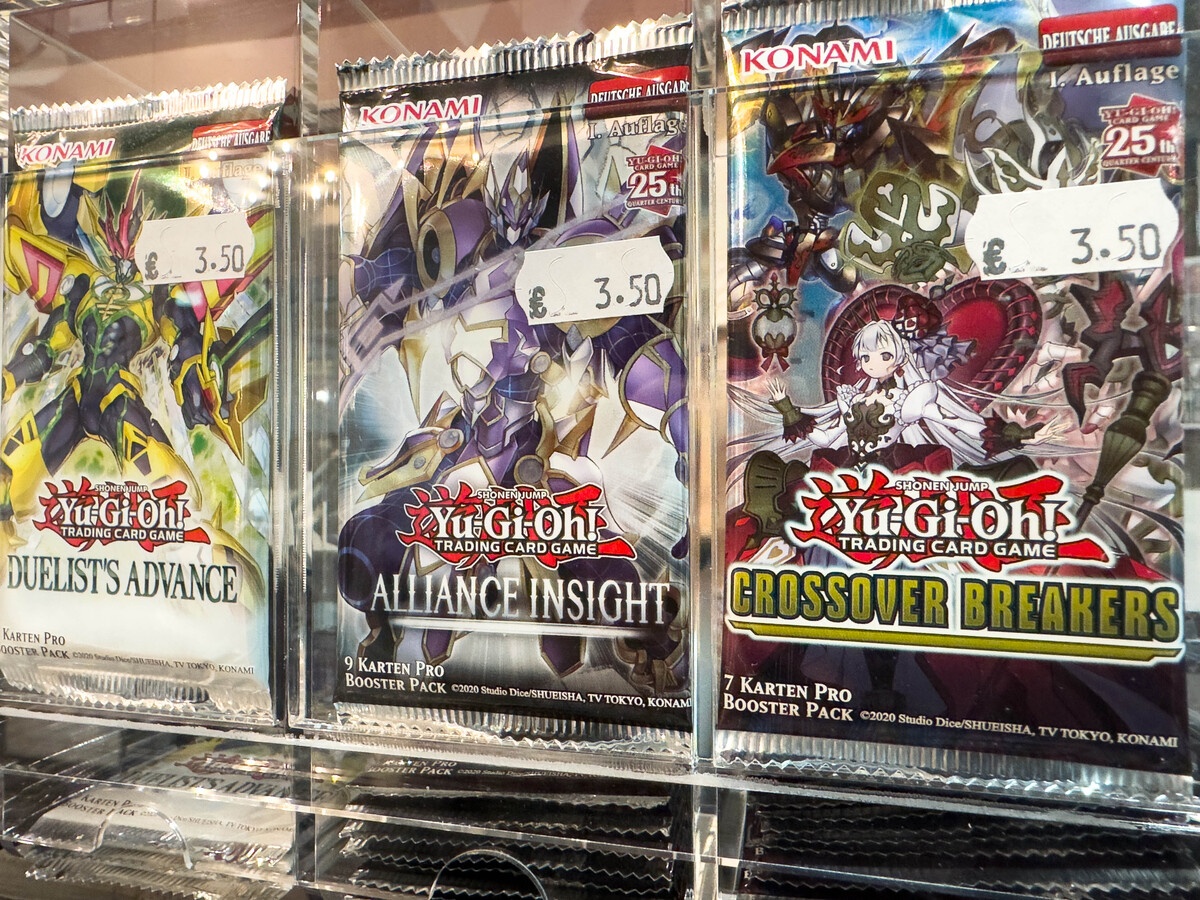
The relationship between physical cards and digital platforms is one of the most important market trends shaping the future of trading card games. Digital card games like Hearthstone proved over a decade ago that the core TCG experience translates to screens. Since then, every major TCG has invested in some form of digital platform. Pokémon TCG Pocket launched as a mobile experience that introduces the card game to millions of phone users who might never visit a local game store. MTG Arena brought Magic to a massive digital audience and became a primary way for new players to learn the game. Yu-Gi-Oh Master Duel offered a free-to-play digital version that pulled in players from around the world.
In practice, digital platforms do two things for the trading card industry. First, they lower the barrier to entry. Learning a complex TCG through a digital client is faster, cheaper, and less intimidating than showing up at a game store and asking someone to teach you. The tutorial walks you through the rules, matchmaking pairs you against opponents at your level, and the collection-building mechanics give you a sense of progress without requiring you to spend hundreds of dollars on physical cards upfront. That matters for reaching younger audiences who are digital-native and expect to try something before committing money to it.
Second, and perhaps more surprisingly, digital platforms push people toward physical cards. This sounds counterintuitive, but the data supports it. Players who start on MTG Arena frequently end up buying physical cards because they want the tactile experience, the social component of in-person play, and the satisfaction of owning something tangible. Pokémon TCG Pocket drives curiosity about the physical product. The digital and physical versions are not in competition with each other. They are complementary, and the TCGs that understand this relationship have an edge over those that don't.
Beyond that, the question of physical and digital convergence also touches on blockchain and NFTs, which generated enormous hype between 2021 and 2023 and have since faded from mainstream TCG conversations. Several companies attempted to create digital cards as NFTs ("digital collectibles"), promising true ownership and scarcity on the blockchain. Most of these projects failed or lost relevance. The trading card community showed limited appetite for digital cards that lacked the tangible appeal of physical cards and the gameplay depth of established digital platforms. NFTs tried to solve a problem that most TCG players did not have, and the market responded accordingly. The future of digital cards almost certainly runs through polished, game-first platforms rather than speculative token systems.
Collectors and investors: reshaping what cards are worth
The collector and investor segment of the trading card market has grown large enough to be its own economy within the broader hobby. Collectors and investors are not just buying cards to play with them. They are buying and selling based on scarcity, condition, and projected future value. This has reshaped the trading card market in ways that affect everyone, from casual players to competitive grinders to the trading card companies themselves.
As a result, the collector-investor economy creates demand for things that have nothing to do with gameplay. Chase cards, limited print runs, special art treatments, serialized cards. These exist primarily to satisfy collector demand. When a Pokémon card is worth $500 not because it wins games but because only 50 copies exist with that particular alternate art, the card's value is being driven entirely by scarcity and desirability rather than utility. That is not inherently bad, but it does change the character of the hobby. Booster packs become more like lottery tickets. The rare cards everyone talks about are the ones with the highest resale value, not necessarily the ones that are most fun to play.
At the same time, market growth in the collectible segment has also attracted scalpers, who exploit high-demand releases by buying in bulk and reselling at inflated prices. Scalpers target new cards and sealed product around launch windows, creating artificial scarcity that frustrates collectors and players alike. Trading card companies have responded with increased print runs, purchase limits, and direct-to-consumer sales, but the cat-and-mouse game continues. The presence of scalpers is, in a strange way, a sign of market health, because it indicates demand consistently outstrips supply for desirable products. But it also degrades the experience for the people the hobby is supposed to serve.
The investment angle has brought market data and analytics into a hobby that used to run on gut feeling and personal taste. Card prices are tracked in real time. Market value fluctuations are analyzed like stock movements. Population reports from grading companies inform buying decisions. This transparency is mostly positive, because it protects buyers from overpaying and gives anyone selling cards a fair benchmark. But it also makes the hobby feel more transactional. When every card in a collection has a known market value attached to it, the relationship between collector and card changes. The joy of owning something beautiful gets filtered through a financial lens, and not everyone is comfortable with that.
Is card collecting slowing down?
This question comes up constantly, and the short answer is no. Card collecting is not slowing down. What happened is that the pandemic-era spike created an unrealistic baseline, and the natural correction from that spike looked like a decline when it was really just a return to sustainable growth. The trading card market experienced the kind of speculative mania that makes everything afterward look disappointing by comparison, but the underlying trend line remains upward.
However, the longer answer requires separating hype from fundamentals. During the boom, trading card prices were inflated by speculators who had no intention of collecting long-term. When those speculators exited, prices for many modern cards dropped, sometimes significantly. That price correction scared people into thinking the hobby was dying. It was not. What was dying was the artificial premium created by short-term speculation. The actual collector base, the people who buy cards because they love them, continued to grow through the correction and remains larger today than it was before the boom started.
New players are still entering the hobby at a healthy rate, driven partly by digital platforms and partly by the cultural relevance of the major franchises. Pokémon continues to attract younger audiences through its games, shows, and merchandise. Magic keeps pulling in strategic gamers through Arena. The pipeline of new fans discovering trading cards for the first time is intact. Card collecting is not slowing down. It is maturing, which is a very different thing.
What is the fastest growing trading card game?
Identifying the fastest growing TCG depends on how you measure growth. In raw revenue, Pokémon TCG has posted the most impressive numbers in recent years, driven by franchise strength, collector demand, and successful product design. The introduction of special art rare cards and immersive set themes has kept the product line fresh while maintaining the collectible appeal that drives repeat purchases.
On the other hand, in percentage growth from a smaller base, games like Flesh and Blood and Disney Lorcana have shown rapid expansion. Flesh and Blood has built a dedicated competitive community and earned respect for its gameplay depth. Lorcana leveraged the Disney franchise to generate massive launch interest, though sustaining that interest beyond the initial excitement remains an open question. One Piece TCG surged in popularity fueled by the anime's global explosion, demonstrating again how franchise strength translates directly into TCG success.
The pattern here is worth paying attention to. The fastest-growing games are either already dominant (Pokémon, Magic) or backed by enormously powerful franchises (Disney, One Piece). Games that rely purely on gameplay quality without franchise support can grow, but the ceiling is lower and the path is harder. This reinforces the winner-takes-all thesis: growth in the trading card industry increasingly concentrates around games that have structural advantages beyond the cards themselves.
Organized play and competitive communities
Organized play remains one of the biggest drivers of long-term TCG health, and the gap between dominant and smaller games is especially visible here. Pokémon, Magic, and Yu-Gi-Oh all support robust competitive play ecosystems with regional tournaments, national championships, and world championship events. These events give players a reason to stay engaged with the game beyond casual kitchen-table sessions, and the community that forms around them tends to be sticky.
The investment in competitive play pays off far beyond the events themselves. Tournament coverage generates content that promotes the game organically. Competitive players drive demand for specific cards, which supports the secondary market and the meta conversation that keeps the community engaged between set releases. Local game store events feed into the broader competitive ecosystem, running from casual weekly meetups all the way to world championships. This infrastructure takes years and significant resources to build, and it is another structural advantage that established games hold over new entrants.
For new TCGs trying to break in, building organized play infrastructure is one of the highest-priority and highest-cost things to get right. Flesh and Blood has done this relatively well, investing early in tournament support and building a competitive community that takes the game seriously. But the resources required to compete with the organized play ecosystems of Pokémon and Magic are staggering, and most new games simply cannot afford to match that investment while also trying to grow their player base and keep product on shelves.
The future of competitive play also intersects with digital platforms. Online tournaments remove geographic barriers and allow players from anywhere in the world to compete. MTG Arena hosts major competitive events digitally. Pokémon has integrated online play into its competitive structure. This digital expansion of organized play is good for accessibility, but it also reinforces the dominance of games that have invested in polished digital clients. A smaller TCG without a digital platform is not just missing a way to play online. It is missing an entire competitive infrastructure layer that its larger competitors take for granted.
What happens to smaller games
Nobody likes to talk about this part, but honesty matters more than optimism. The winner-takes-all dynamic in the trading card industry means that most new TCGs will fail. Not because they are bad games, but because the structural advantages held by Pokémon, Magic, and Yu-Gi-Oh are so large that breaking through requires either a powerful franchise or a level of sustained investment that most companies cannot afford.
After all, the history of trading card games is littered with titles that launched to genuine excitement and then quietly disappeared. Some lasted a few years. Some lasted a few sets. The pattern is consistent: strong launch driven by novelty and marketing, gradual erosion of the player base as the network effects of larger games pull people back, reduced print runs and distribution, then discontinuation. The graveyard includes games that were good to play but could not sustain the critical mass of players needed to keep the ecosystem alive.
New games entering the market today face additional problems. Retail shelf space is finite, and the dominant games take up most of it. Local game store event nights are limited, and store owners naturally prioritize the games that bring in the most players. Content creators gravitate toward the games with the largest audiences, because that is where the views are. Every one of these dynamics makes it harder for a smaller game to gain traction, and each one reinforces the dominance of the games already at the top.
That said, there is a viable path for smaller TCGs, and it looks different from trying to compete head-on with the giants. Games that find a specific niche, whether through unique gameplay mechanics, a dedicated competitive scene, or a particular aesthetic identity, can build sustainable communities without needing to match the scale of Pokémon or Magic. Flesh and Blood has carved out space by targeting competitive players who want deeper strategic gameplay. Force of Will found an audience among players drawn to anime-style art. The key is accepting that "success" for a smaller TCG does not mean competing with the market share of the top three. It means building a community large enough to sustain regular product releases, active secondary markets, and organized play events.
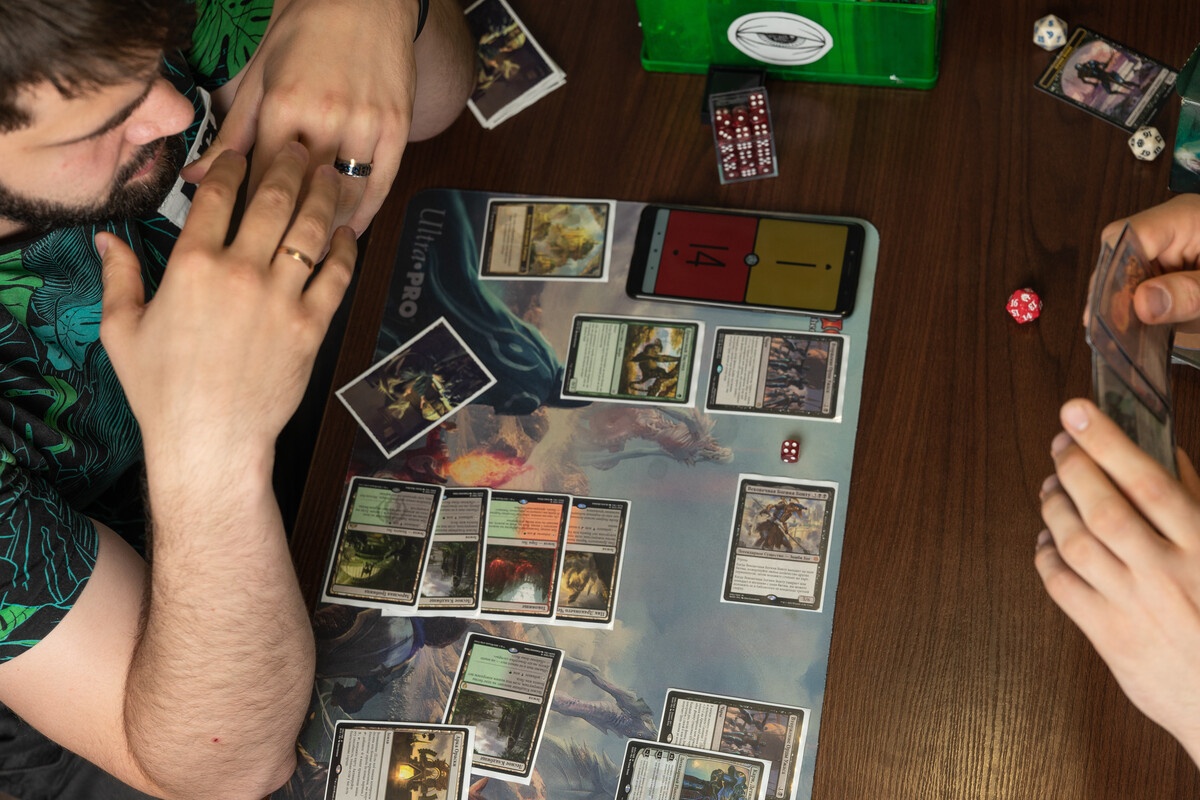
If you want an unscientific way to know if a card game is in trouble, check out their subreddits. If you see posts with binders full of cards with the question "Is this worth anything", it's likely in trouble.
Market forecast: where this all goes
Projecting the future of the trading card market means weighing several converging trends. The overall market will continue to grow. The CAGR projections are supported by expanding geographic reach, the pipeline of new players from digital platforms, and the lasting appeal of physical collectibles in an increasingly digital world. Physical cards offer something that digital experiences cannot replicate: tangible ownership, the sensory experience of handling cards, the social rituals of trading and deck building and playing face to face. That tactile appeal is not going away, and in some ways it becomes more valuable as more of daily life moves to screens.
The winner-takes-all dynamic will intensify. Pokémon and Magic in particular are positioned to capture a disproportionate share of market growth because their franchise ecosystems, digital platforms, organized play infrastructure, and cultural relevance are all compounding. The gap between the top tier and everyone else will widen, not because smaller games get worse, but because the advantages of scale become more pronounced over time. Market concentration is the structural trajectory of this industry.
The collector and investor segment will continue to professionalize. Card collecting is increasingly treated as a legitimate alternative asset class, raising the question of whether trading cards are a good investment in the traditional sense, with market data, grading standards, and transaction infrastructure that rival traditional collectible markets. This professionalization brings benefits and risks. The benefit is greater liquidity, transparency, and mainstream acceptance. The risk is that the financial dimension overshadows the hobby dimension, and the trading card market starts to feel more like a commodity exchange than a community of people who love cards.
New TCGs will keep launching, because the market is large enough that even a small slice represents real revenue. Some of these new games will be backed by major franchises and stand a real chance. Most will not survive beyond a few years. The ones that survive will be the ones that build genuine communities rather than chasing the entire addressable market. The trading card industry has room for a long tail of smaller games, but that long tail exists in the shadow of a very short head.
The most important trend to watch is how well the major games continue to serve their communities. The biggest risk to Pokémon, Magic, and Yu-Gi-Oh is not external competition. It is internal complacency. Overpriced products, poor communication with players, anti-consumer decisions around buying and selling on the secondary market, or neglect of organized play could erode goodwill faster than any competitor could steal market share. The history of gaming is full of dominant players who lost their position not because someone beat them, but because they stopped earning the loyalty of the people who made them dominant in the first place.
Is a trading card market crash coming?
Here is something that rarely gets said out loud: a significant market correction may already be baked in, and the seeds of it were planted by the very boom that made the hobby so valuable.
To understand why, you have to understand what made vintage trading cards rare in the first place. It was not that old cards were printed in small quantities relative to today. In many cases, early Pokémon and Magic sets were printed in enormous runs. What made them rare is something less obvious, a long trough of indifference. For a decade or more after initial release, most people did not think their cards were worth anything. They threw them away. They sold bulk lots for pennies. They left them in binders in garages until the binders disintegrated. The surviving cards are rare precisely because nobody was trying to preserve them. Scarcity was created by neglect, not by intentional conservation.
That dynamic no longer exists. And that changes everything about what the future supply of today's sealed product looks like.
Once it became clear there was serious money in trading cards, behavior shifted completely. Collectors and investors started hoarding sealed booster boxes, first edition sets, and limited releases with the explicit intention of holding them. Not to open. Not to play. To preserve and sell later, on the assumption that scarcity would develop the same way it did for vintage product. Storage facilities, temperature-controlled rooms, and purpose-built sealed product collections have become a meaningful part of the hobby economy.
But here is the problem with that logic: the trough of indifference cannot be recreated artificially. Vintage cards survived because their owners did not know they were valuable. Today's sealed product is being hoarded by people who know exactly what they are doing, and millions of other people are watching. The ignorance that caused the attrition of the old supply does not apply to the new supply. Sealed boxes from 2020 onward are being preserved at a rate that has no historical precedent in this hobby.
So what happens in ten or twenty years when a wave of meticulously stored, NIB sealed product from the peak collecting era starts hitting the market? Supply increases. And unlike vintage supply, which is fixed by the losses of the past, modern sealed supply keeps growing as long as people keep buying boxes to hold rather than open. Once the first sellers start to exit, the dynamic that scalpers and investors fear most kicks in, more supply than demand, which pushes prices down, which encourages more holders to sell before prices fall further, which increases supply more, which drives prices lower still.
It is the same slippery slope that any speculative market faces when the belief in perpetually rising prices starts to crack. The difference between trading cards and traditional investments is that cards have no earnings, no dividends, and no underlying cash flows to anchor their value. Their price is entirely a function of what someone else is willing to pay, which makes them more vulnerable to sentiment shifts than most asset classes.
None of this means the trading card market is headed for a total collapse. The cards with genuine cultural significance, true scarcity, and strong community attachment will likely hold value. A first-edition Charizard is not the same as a commodity booster box from a mid-tier 2023 set. But the broad assumption that all sealed product from this era will appreciate the way vintage cards did deserves serious scrutiny. The conditions that created vintage scarcity are gone. And without them, the case for hoarding modern sealed product as a long-term investment is weaker than most buyers realize.
The market may not crash overnight. But the supply being accumulated today is a structural headwind that the trading card market has never had to navigate before. Worth keeping in mind before stacking another storage unit full of sealed boxes.
The future is bright, but not for everyone
By almost any measure, the future of trading card games looks good. The market is growing. Products are better than they have been in years. Digital platforms are bringing in new players at rates the hobby has not seen before. Physical cards have proven resilient against every prediction that digital would replace them. The major franchises are as culturally relevant as ever.
But the future is not equally bright for every game on the shelf. The trading card market is consolidating around a handful of dominant titles, and the structural forces driving that consolidation are only getting stronger. For Pokémon, Magic, and Yu-Gi-Oh, the path forward is continued growth, geographic expansion, and deeper engagement with their existing communities. For everyone else, the path forward requires clear-eyed realism about what is achievable and a willingness to build something sustainable rather than something enormous.
One Piece, Riftbound, Gundam, Grand Archive and a few others have a good chance but their long term success remains to be seen.
The hobby itself has not changed. Opening a pack and not knowing what is inside. Building a deck and testing it against a friend. Hunting for a rare card for months and finally finding it. None of that cares about CAGR projections or market forecasts. Trading card games have survived recessions, format changes, digital disruption, and speculative bubbles. They will survive whatever comes next. The question is which games get to be part of that future, and how many of today's hopeful new entrants will still be on shelves five years from now. If history is any guide, the answer is fewer than most people expect, and the ones that remain will be the ones that earned their place through gameplay, community, and the kind of franchise strength that no amount of marketing spend can fake.