Your first purchase decides if this hobby costs you $5 or $500. Most beginners pick wrong. Here's the path that skips every expensive mistake.
Trading cards look simple from the outside and turn out to have real depth once you're in. You can collect cards casually for a few dollars a month or go deep into competitive play, set completion, and graded cards worth thousands. Both are valid. The trick is knowing which lane you're in before you spend money.
Card collecting has been a genuine hobby for over a century. Baseball card collecting alone has produced generations of serious collectors. The hobby covers everything from sports cards to trading card games to art-focused collectibles, and every new collector who trades cards eventually finds their niche. This is everything you need to start collecting without the beginner mistakes that cost most new collectors money and enthusiasm.
Start collecting: pick your game first
Before you buy anything, decide what you actually care about. Trading card games split into a few categories.
Sports cards cover baseball card sets, football, basketball, hockey. A baseball card collector is working in one of the oldest and most documented collecting traditions in the world, baseball card collecting has been around since the 1880s, and some base set cards from that era are worth staggering amounts today. The modern sports card market is large, liquid, and data-driven. If you grew up watching a sport and care about the athletes, this is the natural entry point.
Trading card games, Pokemon, Magic: The Gathering, One Piece, Yu-Gi-Oh, are built around gameplay as much as collecting. You build a deck, learn the rules, and play against other people. The card collection serves the game. Some collectors never play at all and focus purely on acquiring cards, but the game gives the card world context and community.
Non-sport collectibles cover everything else: movie cards, anime cards, art cards, limited print run sets with no gameplay. These tend to be niche with smaller but passionate collector communities.
Pick one. You can branch out later. Trying to collect cards across multiple games at once as a new collector is how you spend a lot of money without building anything satisfying.
Card types: what you're actually looking at
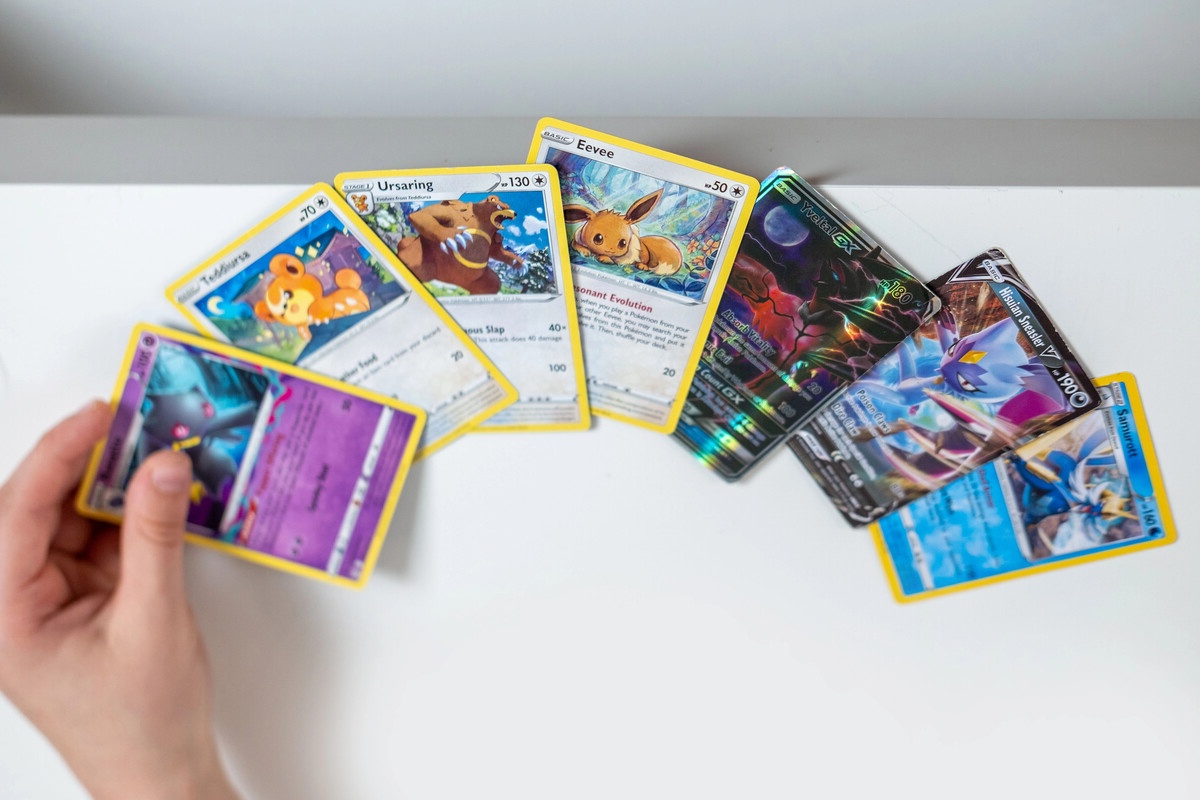
Every set has a structure. Understanding types of cards before you open anything stops you from getting confused about what you have.
Base cards are the standard cards in a set. Common cards make up the bulk. Base card value is usually low, but they're what you need for set completion.
Holo and rare cards are what collectors chase. In Pokemon, that's holographic cards. In sports cards, that's rookie cards, autograph cards, and numbered cards with a limited print run. A serial-numbered card stamped 47/100 means only 100 exist. Lower print run means scarcer card.
Graded cards have been professionally evaluated and sealed by companies like PSA or BGS. A card graded 10 (gem mint) commands a significant premium over the same card raw. Graded cards are easier to buy and sell with confidence because the condition is verified, but at any price point, knowing how to spot fake trading cards protects your money.
Patch cards and autograph cards are the high-end chase in sports collecting. A patch card contains a piece of game-worn jersey from the actual player. These are what drive the big auction numbers.
Knowing what you're hunting shapes how you spend. A collector completing a base set shops very differently from one chasing rookie card pulls.
Booster packs vs starter decks: which to buy first
This is the decision most new collectors get wrong.
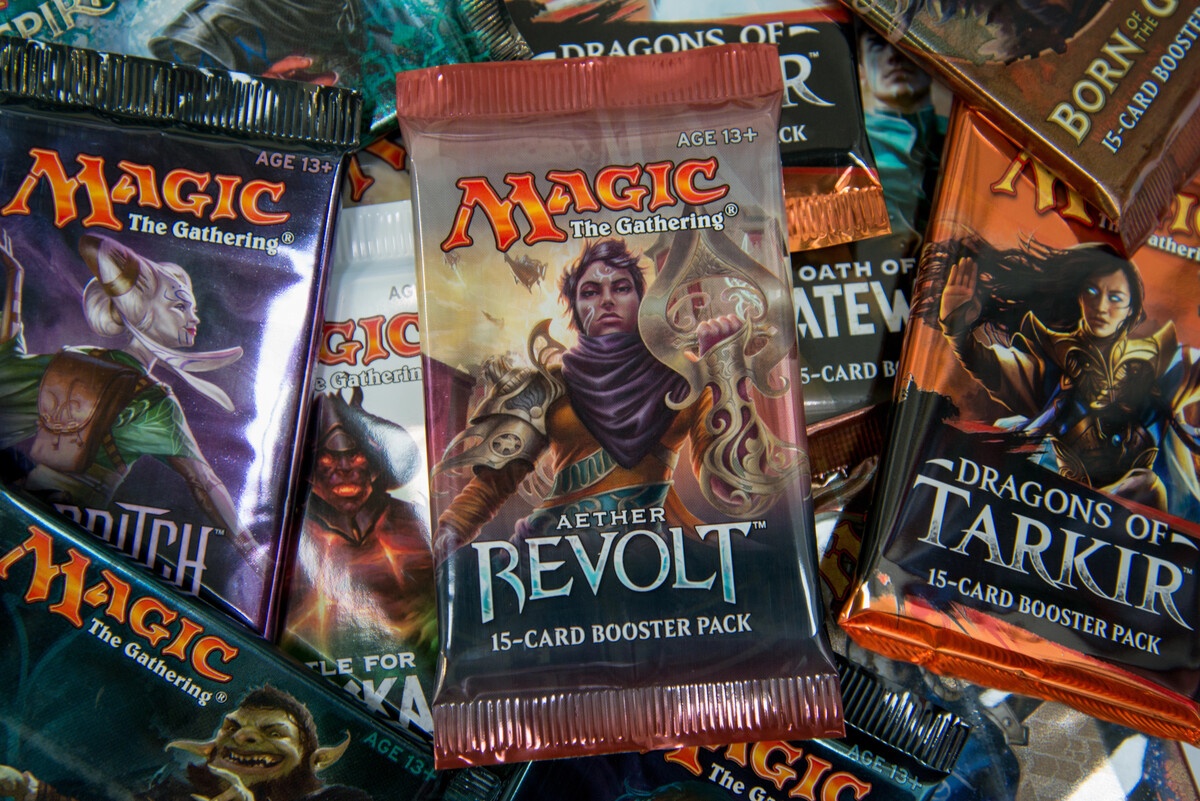
Booster packs are sealed packs with randomized cards. Typically 10-15 cards, a mix of common cards and rare cards, with a small chance at the hits. Buying booster packs is the classic entry point, but also the most expensive way to build a specific card collection. You are paying partly for the gambling mechanic, the experience of not knowing what's inside.
Starter decks (called pre-constructed decks, theme decks, or precons depending on the game) come with a fixed set of cards built around a specific strategy. Pokemon calls them starter decks. Magic calls them precons. Yu-Gi-Oh has structure decks. These are ready to play out of the box with zero randomness.
For new collectors who want to play the game, start with a starter deck. You get to learn the rules with a coherent set of cards before you worry about rarity or value. For collectors who want the pack opening experience, boosters are the point. Just know that buying singles, buying specific cards directly from other collectors or at a card shop, is almost always cheaper if a particular card is what you actually want.
A hobby box is a full box of booster packs, typically 24-36 packs, often with guaranteed hit ratios. Leave those for later. One pack first.
Collect cards or play the game: know what you're in for
This is the most important question before you get too deep.
If you're here for the art and collecting, you want cards that look beautiful, complete a set, or hold personal meaning. Pokemon has some of the best card illustration in the genre. Certain Magic sets have artwork that belongs in a gallery. You can build a personal collection entirely around cards you find visually compelling without ever playing a game.
If you're here for the gameplay, the cards are tools. You care about what a card does in a deck, not how it looks. Competitive TCG play is genuinely demanding, learning Magic at a high level takes real time, but local game stores run beginner nights and casual formats designed specifically for new players.
Most collectors land somewhere in the middle. They like the game and they like nice cards. The risk is that these two things have different economics. Competitive play benefits from buying singles. Pack collecting is about the opening experience. Knowing your ratio, am I mostly a collector or mostly a player, helps you allocate budget before you accidentally buy wrong.
One practical reality worth stating: if you start collecting cards with no interest in playing and the cards don't hold financial value, what you have is expensive art. Some collectors are completely fine with that. Go in knowing it.
Start collecting trading cards: practical first steps
Buy a starter deck or a single booster pack of whatever game interests you. Not a hobby box. One item. Open it, look at the cards, read what they do, look up what they're worth. This costs you five to fifteen dollars and teaches you more than an hour of reading.
Find your local card shop. Card shops are where the community lives. You can browse singles, trade cards with other collectors, find out what's popular locally, and get honest advice from people who actually know the card world. Online tools like Trading Card Dex let you explore sets and cards before you walk through the door. Online forums and Discord communities for specific games are the digital version, both are genuinely useful for a new collector trying to learn what's worth collecting.
Decide whether you want to complete sets, chase specific cards, or build a playable deck. Each path has a different shopping strategy. Set completion means buying common cards cheaply in bulk and tracking which cards in the set you still need. Chasing cards means working the secondary market. Deck building means buying singles for exactly the cards you need. Knowing the print run of a card tells you how scarce it is, a card from a base set with a large print run is easy to find; a numbered card with a run of 25 is not.
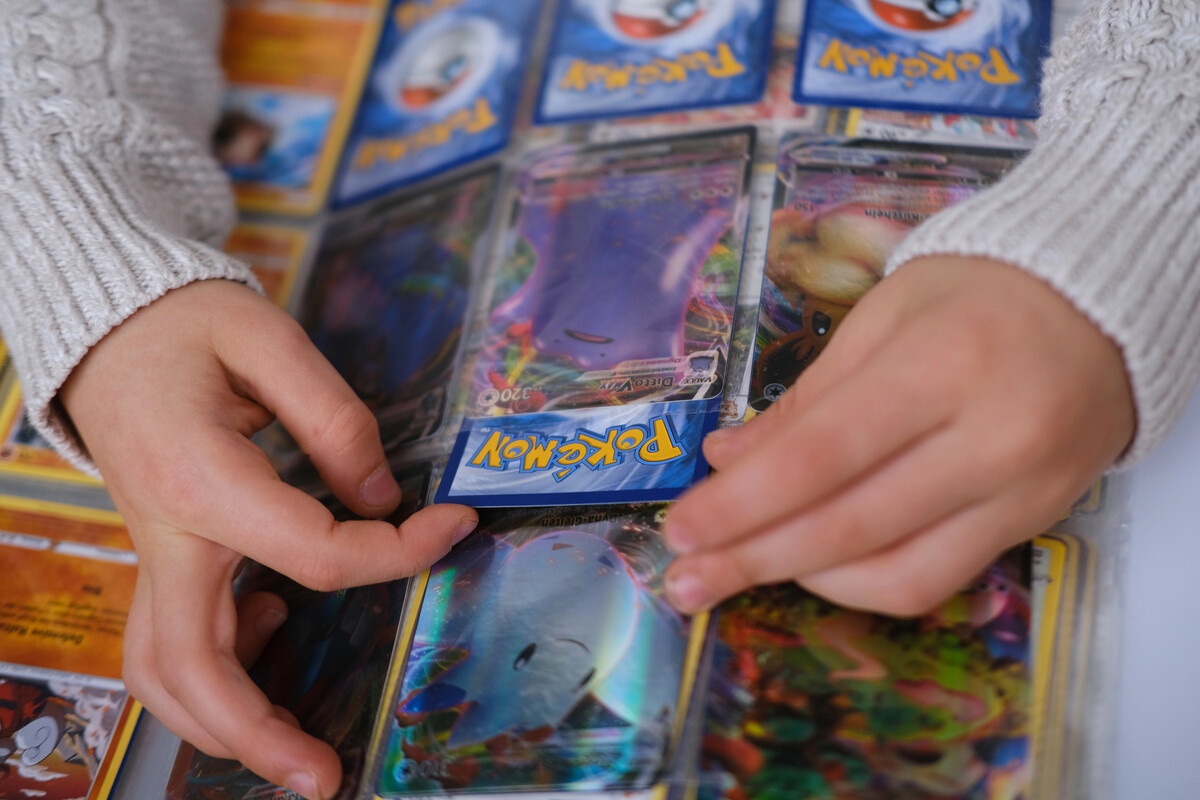
Protect your cards from day one. Card sleeves are cheap. A binder costs a few dollars. A card collection that deteriorates loses value and is harder to trade. Start the habit early.
Set a monthly budget and actually stick to it. Playing trading card games on a budget is entirely possible, but the pack opening mechanic is engineered to keep you spending, and scalpers can inflate prices even further if you're not careful. A budget is not optional.
The honest part
Card collecting is a genuinely rewarding hobby. The community is knowledgeable and usually happy to help a new collector navigate things. Baseball card collecting, Pokemon TCG, and competitive Magic each have their own cultures with decades of history.
The appeal is real. Completing a set, pulling a rookie card you've been hunting, finding a card with artwork that stops you, these feel good in ways that are hard to explain to someone who hasn't been there.
Go slowly. Buy singles when you want specific cards. Open packs when you want the experience. Build a personal collection that means something to you rather than chasing whatever is trending. Every serious collector in the hobby will tell you the same thing: the ones who stay for decades are the ones who made it theirs, not the market's.